


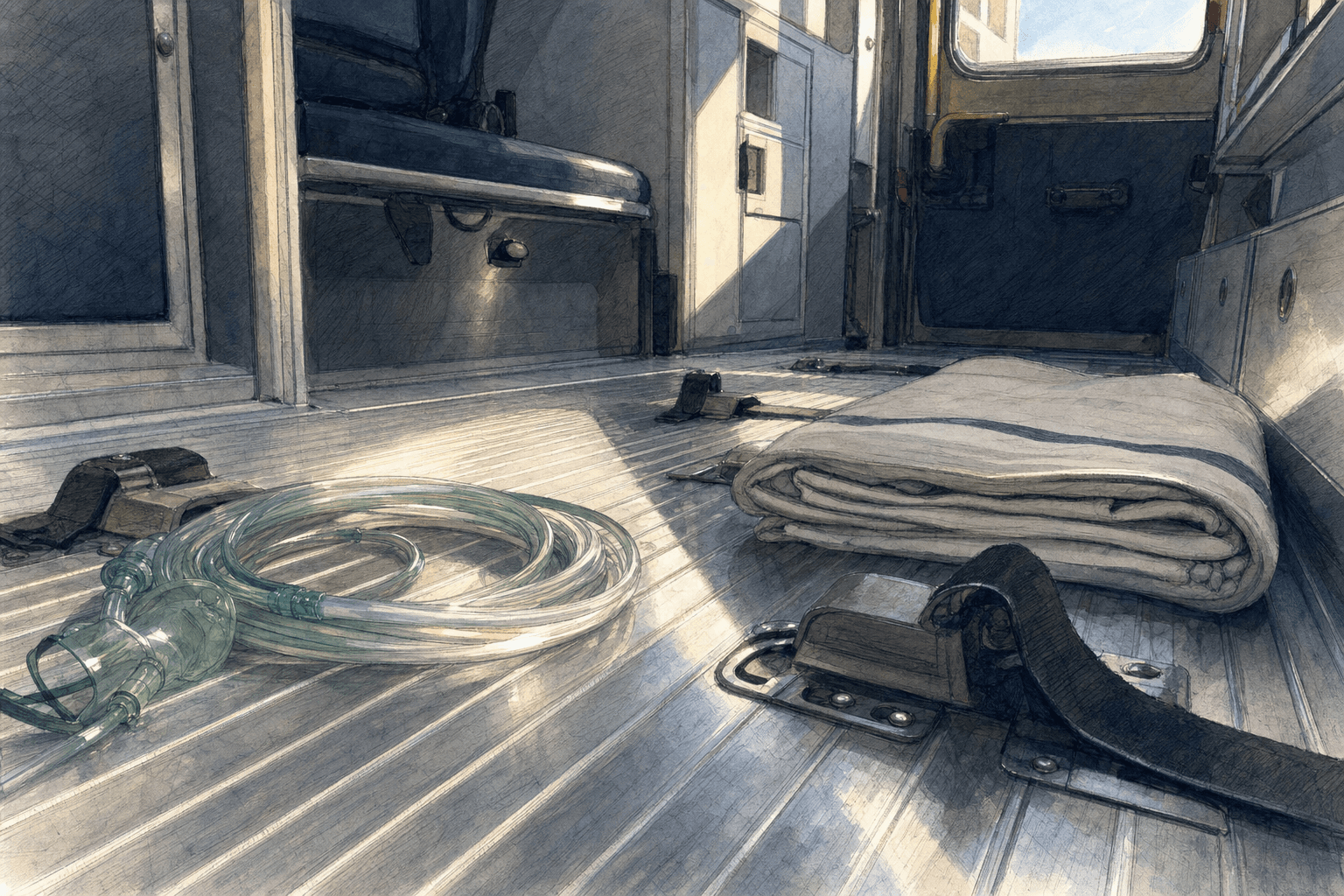
The Middletown Town Council approved buying a demonstration Ford F-550 diesel 4x4 Type I ambulance, with the purchase financed through a five-year lease and the payments covered by the town's Rescue Wagon Special Revenue Fund, according to the Middletown Town Council's published meeting recording.
The vote came after the fire chief told councilors that one of the town's two front-line rescue wagons cannot be kept in service, and that the department currently has no working reserve ambulance at all. Under the resolution read into the record, the purchase was awarded to New England Fire Equipment and Apparatus Corporation, and the finance director was authorized to execute it on the town's behalf. The council approved it by voice vote.
What changed for residents
The practical effect is that Middletown expects a reliable third ambulance in service within roughly 60 days, and possibly sooner. The fire chief said the only remaining work is lettering the truck and installing a powered stretcher lift, after which the town can take delivery.
Until then, the department has been borrowing an ambulance from neighboring communities. The town administrator described that as a daily-scale problem, saying Middletown is "borrowing a rescue wagon all the time," and that the practice also strips the lending towns of their own spare coverage.
Local sponsorAffordable photography lessons in Newport, Jamestown, or your town.E.L. Photo RIThe fleet math
The fire chief said the department staffs two advanced life support rescues around the clock, a level of coverage added in 2019 to absorb rising call volume. Those two ambulances account for roughly 3,200 to 3,600 of the department's approximately 4,400 annual calls, he said, and emergency medical service work makes up 75 to 80 percent of a typical fire department's workload.
The designated reserve is a 2010 model that has been pressed into front-line duty. One of the other rescues has been out of service for three weeks with electrical problems that, according to the chief, neither the manufacturer nor the repair shop has been able to diagnose.
Two new rescues are already on order and expected in February. The plan described at the meeting is for those to become the primary trucks, with the demonstration unit becoming a backup and the better of the current trucks either refurbished or remounted on a new chassis. The end state would be two primary and two backup ambulances, mirroring an arrangement the town already has for its fire pumpers.
The town administrator said the town has run two primary rescues and a single backup for as long as he has worked there, and that the arrangement has failed before. He said two rescue wagons bought roughly 15 years ago had turbochargers fail at the same time, forcing an emergency replacement purchase then, too.
A 28-month wait to order a new ambulance
The reason the town bought a floor model rather than ordering to specification is timing. The fire chief said the current wait to get an ambulance from scratch — selecting a vendor, specifying the build, taking delivery — runs about two to three years, and that vendors are quoting 28 months right now.
That is not a Middletown problem. Long delivery times for ambulances and fire apparatus have become a national issue for municipal fleets, and the industry has drawn scrutiny from antitrust writers, including Matt Stoller, over consolidation among apparatus manufacturers under private-equity-backed and publicly traded roll-ups. A market with fewer independent builders leaves small departments waiting years and taking whatever pricing is offered. Nothing in the meeting recording addressed the ownership structure of the industry; councilors discussed only the lead times and prices they face.
What the recording does show is a department adapting to that market. The fire chief said he expects lot purchases to become the norm, telling the council there is very limited ability to specify these trucks anymore and that he sees departments simply buying what is available. He said Warwick and Providence fire departments have bought ambulances the same way.
A "demonstration" unit, the chief explained, is a truck a vendor buys in advance and drives to departments around the state to show off options, then sells after a month or two. He said the mileage is minimal, and that both the manufacturer's warranty and the Ford warranty apply as they would on a new truck. He acknowledged he has not personally inspected the vehicle, but said he reviewed video, photographs, and spec drawings, and confirmed the compartments closely match what the town had specified for its own order.
A councilor pressed on whether the price made sense, noting that ambulance costs have been climbing sharply. The response from the table was that waiting 28 months would mean paying whatever the price had become by delivery — making the immediate purchase the cheaper option.
The chief also said he examined refurbishing an existing truck instead, but that laying up a vehicle for six to eight months was not workable while the fleet is already short.
How it gets paid for
The purchase does not draw on the property tax levy — the total amount a town raises from property taxes. Instead, the lease payments come from the Rescue Wagon Special Revenue Fund, a restricted account fed by ambulance transport fees billed to Medicare and private insurers.
The town administrator, Shawn Brown, explained the mechanics at the council's request. Fees collected when someone rides in a Middletown ambulance are deposited into the fund and can only be spent on public safety vehicles. The restriction originally covered fire apparatus and was later expanded to include police cruisers.
Residents are not billed out of pocket, he said: if a resident's insurer does not pay, the town does not pursue the balance. Nonresidents do receive bills. He said that to the best of his knowledge Middletown may be the only community in the state that walls off those dollars specifically so vehicle replacement does not land on the tax rate.
Reports filled out by firefighters after each transport go to a town staffer and then to a medical billing company, he said, and the finance director reviews the revenue stream annually and adjusts rates to track what communities are reimbursed for basic runs, advanced runs, and runs involving specialty procedures or drugs.
The same fund is paying for two other fire department purchases the council approved at the same meeting: a station alerting system from PURVIS Systems and replacement fire alarm radio box receiving equipment. It is also the vehicle for a much larger expense on the horizon. The town administrator told the council a replacement ladder truck is coming due within roughly the next five years and now costs $2.5 million to $2.7 million.
How we got here, and what's next
Councilors discussed the ambulance as a lesson already learned once. The town administrator said the council has come to understand that lead times force earlier ordering, and that the pumper fleet's two-primary, two-spare structure is what the rescue fleet still lacks. One councilor observed that the town had expected to limp along until February; the administrator agreed that assumption no longer holds.
The next step is delivery. If the timeline described in the council's docket holds, the ambulance arrives within 60 days, with the two ordered rescues following in February. Residents can read the resolution and the accompanying memorandum from the fire chief in the council's meeting materials, and the council's next regular meeting is scheduled for September 21, 2026.