


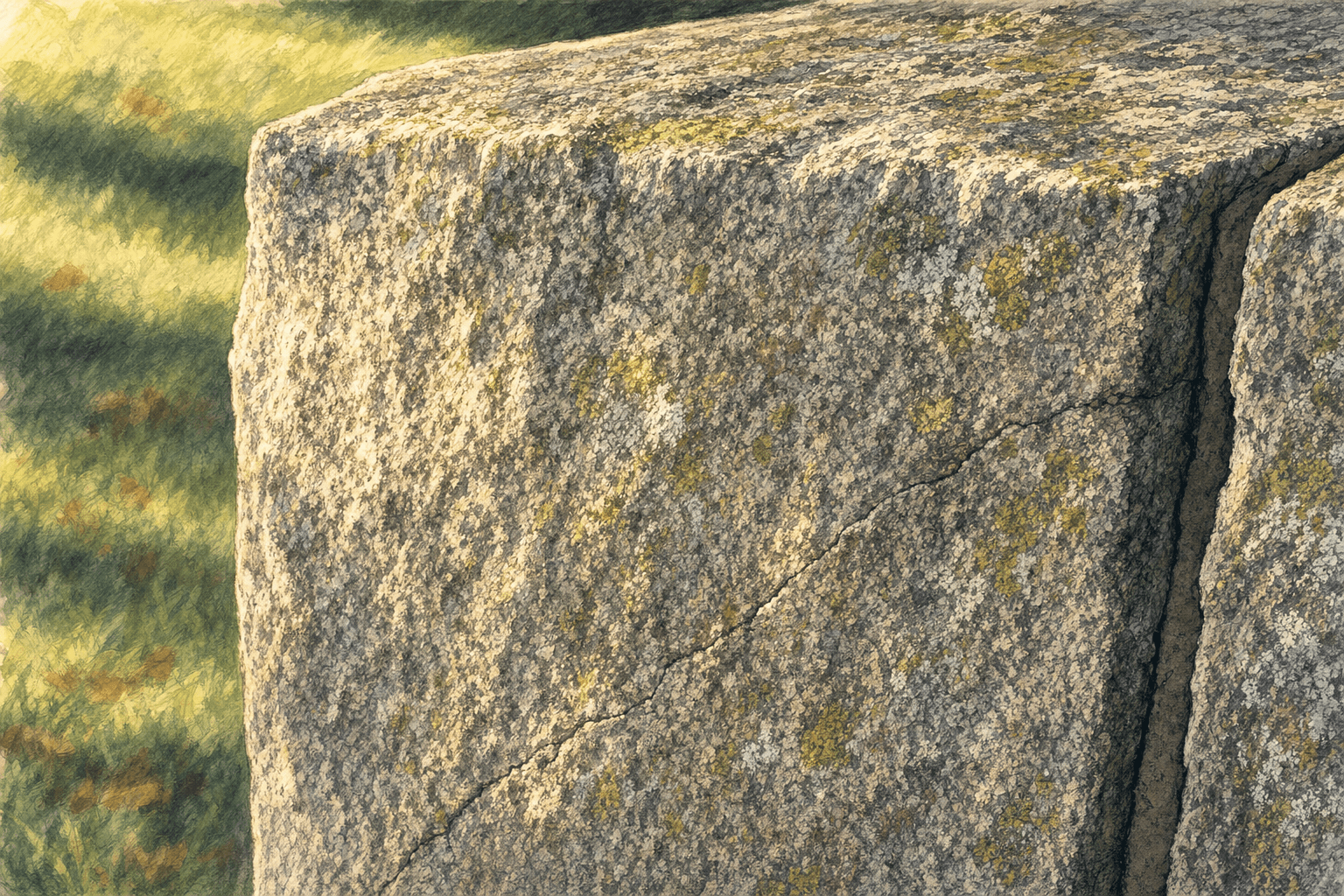
The Smithfield Town Council voted Tuesday to hold off until September on any decision about a state agreement to repair a historic granite cemetery wall, after a half-hour presentation from the town's Historic Preservation Commission that accused the Rhode Island Department of Transportation (RIDOT) of misrepresenting burial data and proposing a concrete-faced repair that commission members called both inferior and unnecessary.
The item, taken up under new business at the council's August 4 meeting, asked the council to act on a RIDOT construction and maintenance agreement to stabilize the wall at a historic Greenville-area cemetery, and on RIDOT's proposal to hand the project over to the town. According to the Smithfield Town Council's published meeting recording, the council instead voted by voice vote to continue the matter to its first September meeting, with the town's public works director and the town solicitor directed to negotiate with the state in the meantime.
What the town would be signing
The practical question for residents is who pays if the repair runs long. Under the draft agreement described at the meeting, the state's participation is capped at $750,000, and the town would be responsible for any cost above that. A council member said the draft, as written, does not guarantee reimbursement of the town's expenses, requires state approval of essentially every element including the design, and imposes strict requirements on who may be hired.
Local sponsorAffordable photography lessons in Newport, Jamestown, or your town.E.L. Photo RIThe larger concern raised from the dais was that RIDOT could withdraw from the project at any point and stop contributing money, leaving the town holding an unfinished repair. If the state keeps the project, the argument went, the state is obligated to finish it. That was the basis for a recommendation that the town not take the project over.
The public works director: 'I would never recommend signing that agreement'
Gene Allen, the Director of Public Works and Water Commissioner, told the council he had two separate problems with the document. The first is a legal one: the agreement would require the town to certify that the wall sits within a public right-of-way, and he said it does not.
"It's a private wall; it is a private cemetery. There's been a title search done on it," Allen said. He said some form of document or taking would be required before the town could legally spend money there.
His second concern was the administrative weight of the deal. Because federal money is involved, the town would have to follow state and federal bidding law and pay prevailing wage, the standard hourly rate set by government for public construction work. The agreement, he said, would require the town to retain an engineer and a project manager.
"The agreement — I would never recommend signing that agreement the way it sits right now," Allen said. "In my professional opinion, and dealing with thousands of contracts over my career, it's probably not one that I would ever entertain." He added that the job is neither as simple as some had suggested nor as complicated as the state's design implied, and that there is "probably a happy medium."
Allen also reported a conversation with RIDOT's director indicating that the state historic preservation agency is now on board with one of RIDOT's designs. He told the council he had received no documentation of that and was relaying only a conversation. Several members said they wanted that in writing before proceeding.
The commission's case against the state's design
The Historic Preservation Commission's presentation ran roughly 24 slides and drew repeated requests from the dais to wrap up. A commission representative said the commission has been working on the wall since 2023 and learned only later that RIDOT had been developing plans for about two and a half years without notifying it.
Central to the commission's argument was ground-penetrating radar data — a survey method that images buried features without digging. The presentation said the radar found no burial features across a substantial stretch behind the wall, contradicting what the commission described as RIDOT's representation that burials sat nine to 30 inches from the granite. The commission also said the middle section of the wall, roughly 12 to 14 feet, is self-supporting because a vault sits behind it and needs no reinforcement at all.
The commission read from a response it attributed to the Rhode Island Historical Preservation & Heritage Commission stating that potential burials may be far enough from the deflected section that the wall can be rebuilt without disturbing them, and that RIDOT "should consider and provide for review alternatives that allow for restacking or stabilizing the wall and not obscuring it."
Chad Morrison, a registered professional engineer who serves on the Smithfield Historic Preservation Commission and chairs its subcommittee for this project, laid out the technical objection to the state's approach. He said RIDOT's four design concepts carried cost estimates ranging from $151,000 to $199,000, and that those figures do not include moving the road or the sidewalk, which he said would be necessary if a concrete façade encroached on them.
Applying shotcrete — sprayed concrete — over the granite face would conceal the stone, block drainage and require new drainage features that must be cleaned out, Morrison said. He put the design life of that treatment at 50 years against granite that has stood unreinforced for 150 years or more, and noted that road salt attacks concrete. Under the current agreement, he said, the town would be responsible for maintaining the wall after construction.
Morrison said he had submitted a professional opinion that the project can be completed within the $750,000 budget, and that the full commission supports that view. The commission said it had developed four alternatives, including shoring installed behind the wall that would stay in place permanently with improved drainage, and reported a $65,000 quote for concrete work on both structures. Commission members confirmed from the podium that they were paid nothing for the design work.
A presentation that turned personal
The exchange grew sharp more than once. The presenting commission member was interrupted repeatedly and at one point told the council, "Please give us the respect, after all the work we've done, to hear us out for two more slides. It's unfair. It's not really democratic to have us be sitting in the back seat."
A council member accused the presenter of taking credit for past town work and suggested his involvement drives up project costs; the presenter disputed both. Morrison intervened to redirect the discussion, saying that if the presenter's character or past projects were in question, he had been designated as subcommittee chair for this project and could speak to it himself.
The presentation also invoked federal funding for historic preservation in Rhode Island, crediting U.S. Sen. Jack Reed with securing $750,000 for the Rhode Island Historical Preservation & Heritage Commission.
Where things stand
At least one council member said plainly that the state's concrete-facing approach "makes no sense," but also that the draft agreement "doesn't obligate them to anything, and it doesn't even obligate them to give us the money." The suggested path was for the town solicitor to sit down with the state's attorneys and produce an agreement that does not create unnecessary liability for the town.
There was no dispute that the wall needs work. A town official said a complaint about the wall's safety dates to 2019, that a professional engineer measured it over a year and a half across all four seasons, and that the wall has not moved since. "It definitely should be fixed," that official said.
During public comment, a resident of 75 Whipple Road identified as Bovis urged the town to keep the granite exposed and use tiebacks rather than a cement veneer, and said the job could be done by a private company for something over $100,000 without prevailing-wage requirements. That claim was not tested against the federal funding rules the public works director described, which would apply to the state-funded version of the project.
The council voted by voice vote to place the item on its September 1 meeting agenda, with the understanding that it could slip to the second September meeting if negotiations are not finished. That September 1 meeting has been moved to the Smithfield Senior Center because of early voting at Town Hall, and the council canceled its August 18 meeting. Residents who want to weigh in can attend the September 1 session or address the council during its public comment period.