


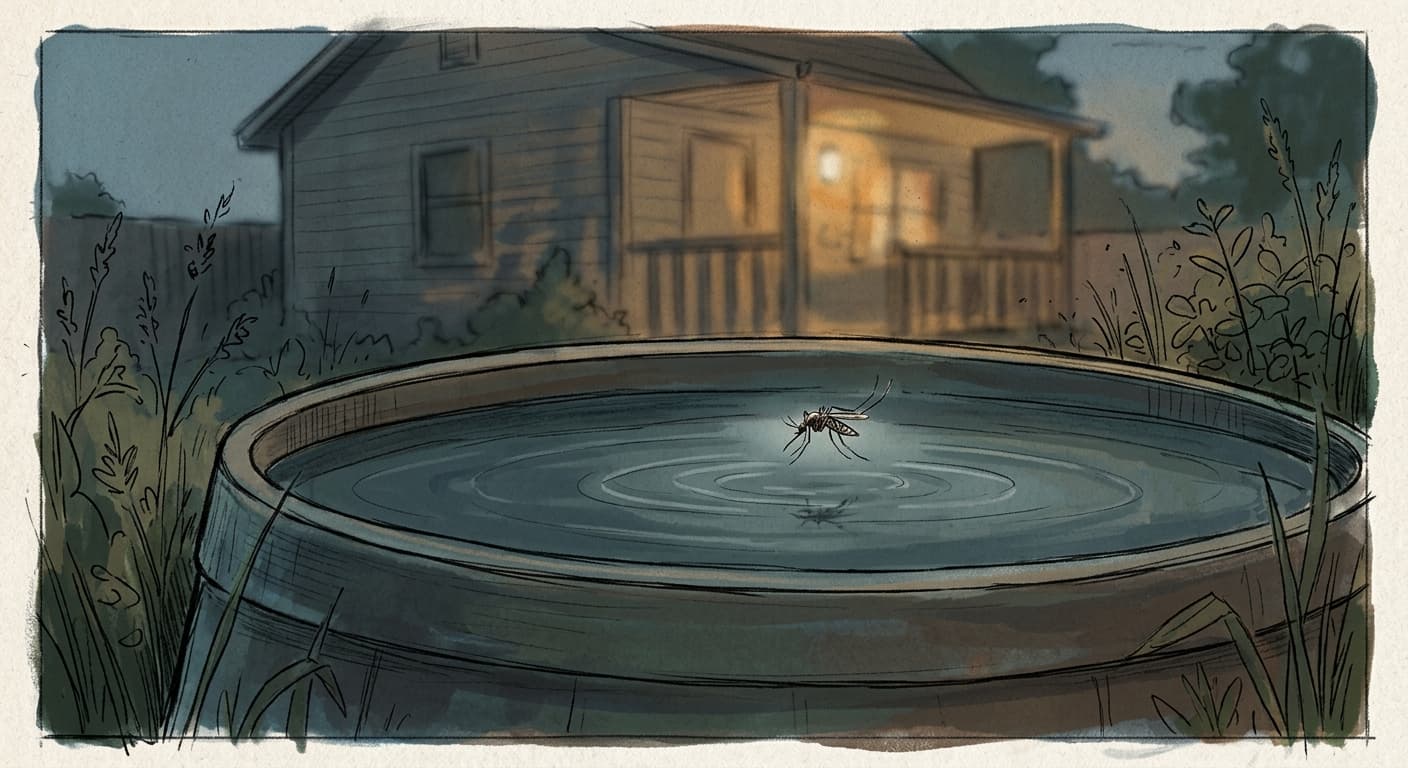
A mosquito trapped in Cranston on July 14 has tested positive for West Nile virus, the Rhode Island Department of Environmental Management and the Rhode Island Department of Health announced Friday. It's the second detection of the virus in the state this year.
The finding follows a positive sample collected in Providence on June 29 and announced July 9. Together, the two detections mark the start of what has become a recurring summer concern for Rhode Island: a mosquito-borne virus with no vaccine and no cure, tracked one trap at a time.
The state's risk level for West Nile remains "medium" statewide, according to DEM and RIDOH — the baseline level maintained through most of mosquito season, not an escalation. No human or animal cases of the virus have been reported in Rhode Island this year.
Local sponsorWorld-class website design at a small business priceCompany 50Detection, not diagnosis
The distinction matters. Finding the virus in a mosquito is not the same as finding it in a person, and RIDOH's own surveillance data shows zero human cases in the state so far in 2026.
The Cranston sample was identified as Coquillettidia perturbans, a mosquito species that acts as what scientists call a "bridge vector" — it bites both birds, which can carry and amplify the virus, and mammals, including people, allowing the virus to jump species. The sample was tested at the Rhode Island State Health Laboratories using molecular methods designed to detect the virus in pooled mosquito groups.
This isn't Cranston's first appearance in the state's arbovirus surveillance. A mosquito collected there in August 2025 also tested positive for West Nile, part of a cluster of detections — alongside Johnston and East Providence — that pushed the statewide risk level to "high" last year. Why Cranston keeps turning up positive samples isn't something DEM has publicly explained; officials haven't pointed to specific environmental or ecological drivers.
For most people, an infected bite causes nothing at all. Roughly one in five infected people develop a fever along with symptoms like headache, body aches, joint pain, vomiting, diarrhea or rash. Fewer than one percent develop severe neurologic disease — meningitis or encephalitis — that can cause long-term disability or death. Adults 60 and older and people with certain underlying medical conditions face the highest risk of severe illness.
How do I protect myself?
With no vaccine or treatment available, prevention is the only real defense, according to public health guidance:
- Use an insect repellent registered with the Environmental Protection Agency.
- Wear long, loose-fitting shirts and pants, which make it harder for mosquitoes to bite.
- Avoid being outside at dusk and dawn, when the mosquitoes that carry West Nile are most active.
- Keep window and door screens in good repair, or run air conditioning instead of leaving windows open.
- Empty standing water from buckets, gutters, planters and anything else that collects rain, since mosquitoes breed in stagnant water.
This year's detections are arriving against an unusually early national backdrop. The Centers for Disease Control and Prevention has said the country is seeing its earliest start to West Nile season in more than two decades, with 48 cases reported nationally as of June 30 — nearly 80 percent of them involving the more severe neuroinvasive form of the disease.
DEM traps mosquitoes statewide every week from June through the first frost, typically in mid-October, sending samples to state health labs for testing. The results — including any future detections — are posted on RIDOH's arboviral surveillance data page, which the public can check throughout the season.