


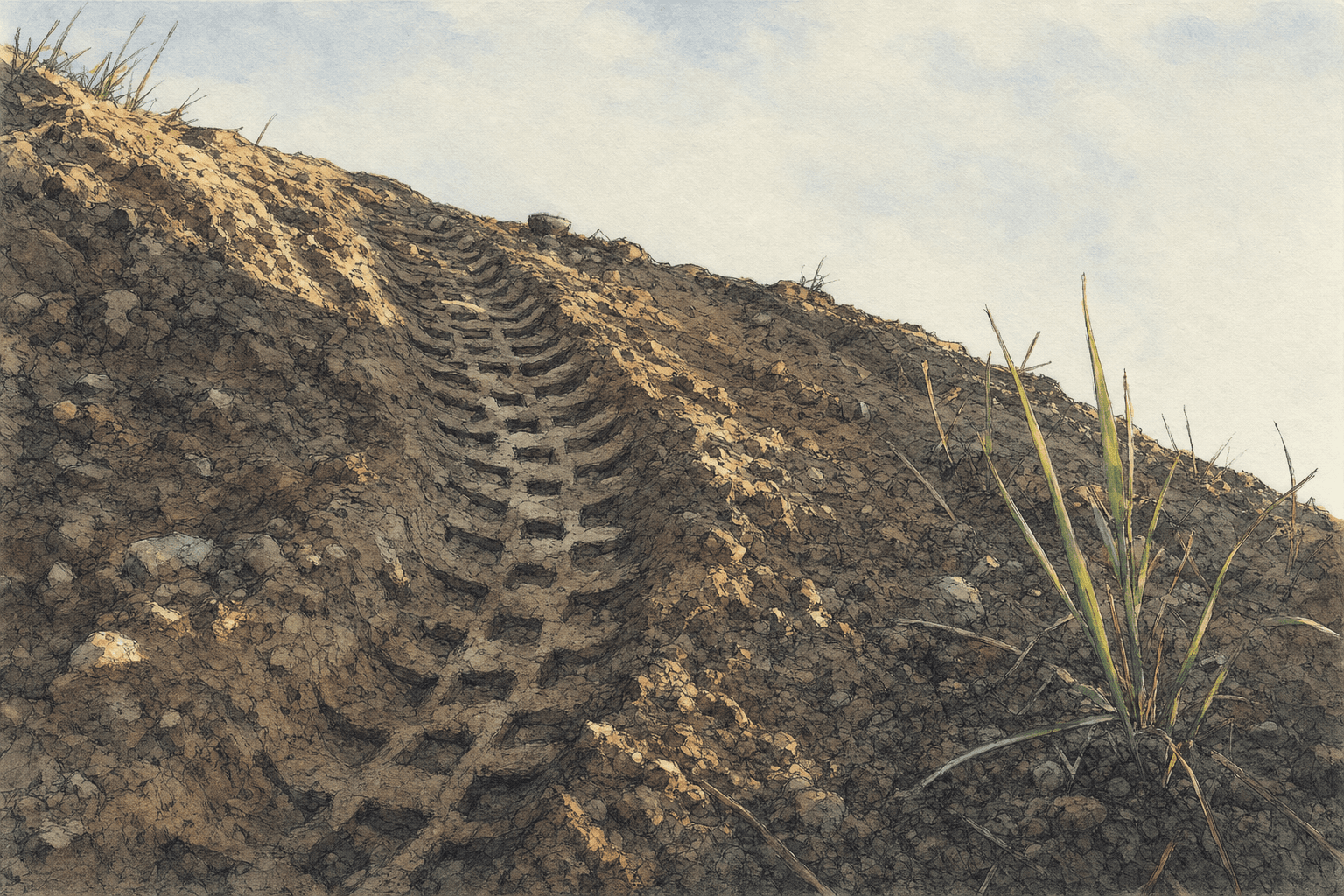
The North Providence Town Council voted Tuesday to send the long-stalled project at a town-owned former farm property to its Finance Committee, after a councilman and a neighbor pressed the administration on a state grant that was withdrawn without the council's knowledge and on a dirt stockpile a resident described as a 60-foot mountain across from his front door.
The item appeared on the council's August 4 agenda at the request of Councilman Pollock, according to the North Providence Town Council's published meeting recording. It was one of two motions the council approved by voice vote on the property; the second directs a request to the Department of Public Works to cut back overgrowth along the street that serves the site.
The grant nobody told the council about
Pollock opened by saying he and other council members believed a design had been settled at a special meeting in June of last year, and then learned from a newspaper article that a grant tied to the property had been given up.
"I know I wasn't aware that the grant was turned back," he said, adding that residents called him afterward and he had no answers for them. "When I got the calls, I had no answers for them because I did not know that that grant was —"
Local sponsorAffordable photography lessons in Newport, Jamestown, or your town.E.L. Photo RIThe town's grants manager told the council two grants remain attached to the property: one through the Rhode Island Infrastructure Bank for Phase One design, and a $1 million federal earmark. One can serve as the local match for the other — meaning the town's required share of a grant's cost can be covered with other grant money rather than local tax dollars.
She said the withdrawn grant was a Rhode Island Department of Environmental Management award, and that state grants carry less flexibility than federal ones. By the time the council approved a final design, she said, "the concept was so vastly different than what we had applied for that they considered it to no longer be the same project."
The advice she received, she said, was to "withdraw without prejudice," a procedural step that ends the award without penalty and preserves the town's ability to apply again once the design is settled. She said the town has since received an extension from the Rhode Island Infrastructure Bank and is preparing to bid out the formal design work. Right now, she said, the town has a concept but not a finished design.
She also offered to appear before the Finance Committee with reports and to explain her role, noting her office is across the hall from the council chamber. That offer is the mechanism by which the council's referral will be taken up.
Pollock did not dispute the explanation but returned to how the council learned of it. "I appreciate you coming and the explanation," he said. "I think some of us, if not all, were just caught off guard reading the Valley Breeze, that we all knew."
What the neighbors see
Michael Porter, of Hamlin Street, told the council the conditions on the ground have gotten worse while the paperwork has moved. He said a neighbor sat down with the mayor in late November about truckloads of fill arriving at the site, and that the mayor made a phone call saying no more dirt would come.
"But it kept on coming and it kept on coming all the way until the weather changed," Porter said. He said deliveries resumed in March, which he and neighbors assumed was material from a school athletic-field project.
"Right now, when we walk out my front door, I have a 60-foot mountain of dirt, all grown over with grass," Porter said. He described children riding bikes up and down the piles and said "somebody is going to get hurt, because this keeps getting put off and off and off."
Porter said the fix is not simply spreading the material out. He said the back portion of the site has drainage problems, and that the mayor has indicated part of it may need to sit on concrete slabs raised roughly 11 feet. "It's going to have to be done nicely so nobody gets flooded on the other end of the street," he said.
He also described the street itself as neglected: a layer of gravel and tar that is "giving away slowly," brush grown in so far that cars have trouble getting through, and a street that he said appears on only one of the town's two road maps. He told the council he had to call for help getting the street plowed during last winter's largest storm.
Porter tied the delay to money. "I know we lost the $400,000, but if the other things are still open, I count that's almost like $4.5 million," he said. "I think they said this was only going to cost around two to have it done." The council did not reconcile those figures during the discussion, and no official at the meeting offered a current total project cost.
He also raised property values, saying a realtor told him the site is hurting the value of his land, and described dust blowing off the pile.
Four versions of a plan
A second resident pressed a broader question: "Why does it take so long to get any projects done?"
Pollock's answer, in substance, was that the plan keeps changing. He said the town and the mayor's office originally developed a plan for a field, "the neighbors did not want that, and I understand," and the plan changed again. "This is the fourth reiteration of the plan," he said.
He also pointed to the bidding process as a source of delay, saying the town cannot simply hire and buy the way a homeowner can. The resident was unconvinced, arguing the town should have finished designs before spending and should tell residents plainly when a change costs the town money.
Runoff at a separate property
Earlier in the same meeting, during a discussion of a different town-owned parcel, residents raised a related complaint about stockpiled soil: that heavy rain washed sediment off the site, over a small bridge and into a pond.
A town official explained that soil is being stockpiled in a ramp fashion against an embankment and will be spread flat once brush is cleared. He said runoff occurred twice, that the town received an inch and a half of rain in 45 minutes, and that he met the engineer and contractor on site that morning and "stepped that soil-erosion plan way up from the engineer's design." He said the runoff "should not occur anymore."
What happens next
Both motions on the former farm property passed by voice vote: one referring the project to the Finance Committee, and one directing a request to the Department of Public Works about the overgrowth on Hamlin Street. No date was set at the meeting for the Finance Committee session, and no timeline was given for leveling the stockpiles.
Council members were told the town is bidding out the formal design and holds an extension from the Rhode Island Infrastructure Bank; the recording did not include a deadline for that extension. Residents who want to follow the project should watch for a posted Finance Committee agenda, where the grants manager said she would present her reports and answer questions.