

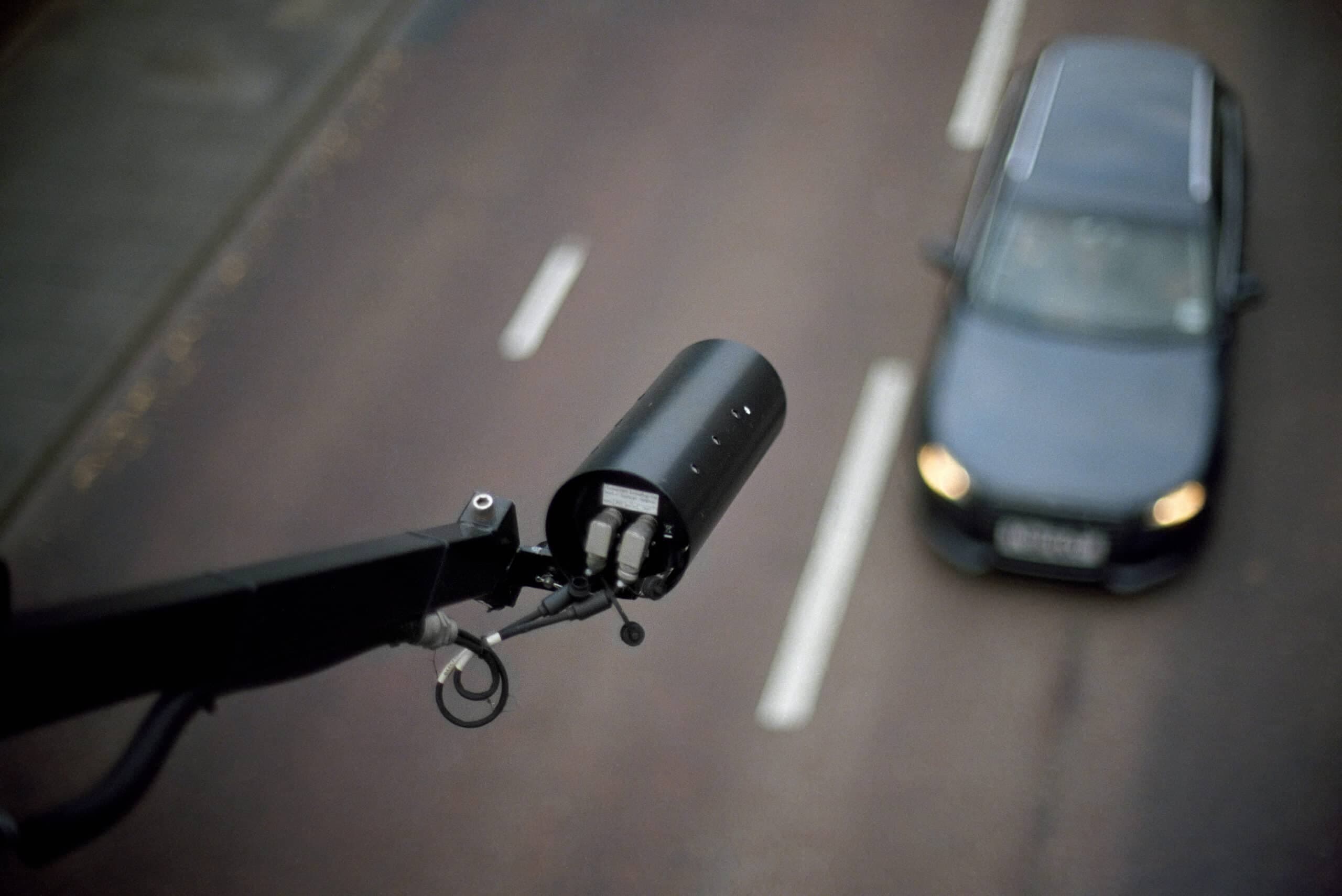
A new federal lawsuit filed on Monday in Norfolk, Virginia is challenging the constitutionality of automated license plate reader (ALPR) cameras manufactured by Flock Safety, claiming they violate Fourth Amendment rights against unreasonable searches. The lawsuit, filed by two residents with support from the Institute for Justice, targets Norfolk's network of 172 surveillance cameras that track residents' movements without probable cause or warrants.
"I don't like the government following my every movement and treating me like a criminal suspect, when they have no reason to believe I've done anything wrong," says Lee Schmidt, a 42-year-old Norfolk resident and Navy veteran who joined the lawsuit. Crystal Arrington, a 44-year-old home health care worker and co-plaintiff, adds, "My work requires me to drive around Norfolk very often, and it's incredibly disturbing to know the city can track my every move during that time."
The situation hits close to home, as Flock cameras have quietly proliferated across Rhode Island. Currently, at least eight Rhode Island municipalities have deployed these surveillance systems: Providence (56 cameras), Cranston (27 cameras), East Providence (19 cameras), Woonsocket (15 cameras), Warwick (10 cameras), Johnston (3 cameras), Smithfield (2 cameras), and Rhode Island College (3 cameras). Together, these cameras scan over 2.8 million vehicles monthly in Rhode Island alone. More concerning, Cumberland and Newport are actively deploying these systems, further expanding this troubling surveillance network.
The data sharing between departments reveals the true scope of this surveillance state. Woonsocket shares its data with over 400 other law enforcement agencies across the country. Providence shares with 39 other departments, including agencies as far away as Houston, Texas and the New York State Police. This means that your daily movements - where you work, worship, seek medical care, or visit friends - could be accessed by law enforcement officials across the nation.
While Flock Safety claims these systems cannot be abused, evidence suggests otherwise. The list of documented abuses is both lengthy and disturbing:
In Española, New Mexico, a misread license plate led to a traumatic incident where 21-year-old Jaclynn Gonzales and her 12-year-old sister were held at gunpoint and handcuffed due to the system mistaking a "2" for a "7" on their license plate.
In Sedgwick, Kansas, Police Chief Lee Nygaard used the system 228 times over four months to stalk his ex-girlfriend and her new boyfriend, even following them out of town in his police vehicle. He only admitted to the abuse when investigated for unrelated misconduct.
In Aurora, Colorado, Brittney Gilliam and her four children (aged 6, 12, 14, and 17) were held at gunpoint and forced to lie face-down in a parking lot due to a system error that confused their SUV with a stolen motorcycle from Montana. Officers even attempted to handcuff the 6-year-old child.
In Litchfield, Arizona, multiple incidents of misread plates have led to wrongful stops and detentions of innocent citizens, demonstrating the system's technical unreliability.
Perhaps most troubling is Flock Safety's own dubious legal compliance. According to Forbes, the company has installed hundreds of cameras without proper permits across multiple states, leading South Carolina to impose a moratorium on new installations after discovering over 200 unpermitted cameras. In Illinois, a Flock representative allegedly threatened a Department of Transportation official with police intimidation when questioned about permit applications, suggesting they would send "about 30 different police chiefs" to pressure the official.
This raises serious questions about oversight and accountability. As South Carolina Rep. Todd Rutherford noted, "People don't know what is happening with that data, who is accessing it, who is keeping it. All of that infringes on our personal freedom without our knowledge."
The never-ending expansion of surveillance technology begs the question: Where does it stop? When each Rhode Islander is assigned an individual police drone to follow them around? When facial recognition cameras are installed on every street corner? Public officials must accept that in a free society, we cannot prevent every crime nor catch every criminal - and that's okay. The alternative is a surveillance state that would make George Orwell's 1984 look tame by comparison.
What can Rhode Islanders do to stop the proliferation of these surveillance cameras? First, contact your town council members and express your concerns. Demand public hearings before any new surveillance systems are installed. Ask for transparency about how the data is used, stored, and shared. Request regular audits to prevent abuse and criminal charges for those that do. If your town already has these cameras, demand oversight committees with civilian representation.
Second, support organizations fighting against mass surveillance. The Electronic Frontier Foundation, American Civil Liberties Union, and Institute for Justice are all working to protect your privacy rights.
Third, spread awareness. Many Rhode Islanders don't realize their movements are being tracked and stored in databases accessible to hundreds of law enforcement agencies nationwide. Share this information with your neighbors, friends, and family.
The choice between privacy and security is a false dichotomy - especially when these systems provide little actual security while substantially eroding privacy rights. Flock's CEO claims their cameras "cover almost 70 percent of the population" and solve "about 2,200 crimes a day," but these numbers cannot be independently verified and must be weighed against the cost to civil liberties.
As more Rhode Island communities deploy these systems, we must ask ourselves: Is this the kind of society we want to live in? One where every car trip is monitored, recorded, and shared with hundreds of law enforcement agencies across the country? One where technical errors can result in innocent people being held at gunpoint? One where rogue officers can abuse the system to stalk ex-partners?
Rhode Islanders deserve better than to be subjected to constant surveillance in the name of public safety. The time to act is now, before these systems become so entrenched that dismantling them becomes impossible. Our privacy, our freedom, and our constitutional rights hang in the balance.