

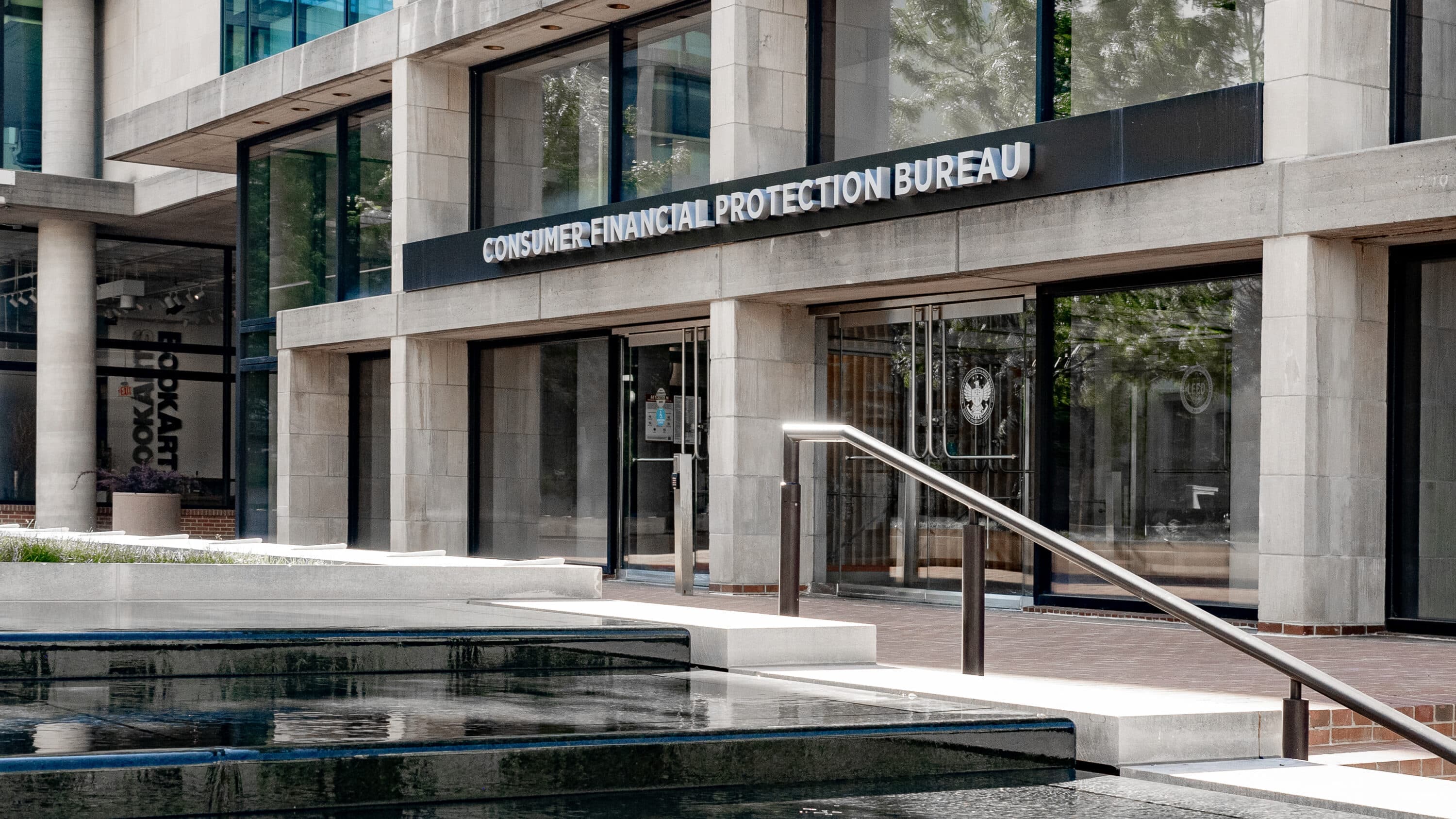
The Consumer Financial Protection Bureau—the federal agency responsible for protecting Americans from predatory financial practices—effectively ceased operations this weekend following the abrupt firing of its director, Rohit Chopra, marking one of the most significant reversals of consumer protections in recent history.
The shutdown, orchestrated through the Trump administration with support from tech billionaire Elon Musk, has immediately frozen all enforcement actions, investigations, and consumer protection measures previously handled by the agency. Treasury Secretary Scott Bessent, named as acting director, ordered the CFPB's 1,600 employees to halt all activities related to enforcement, litigation, and public communication.
The agency's closure represents a striking victory for banking industry donors who contributed tens of millions to Trump's campaign, explicitly seeking the elimination of government oversight of financial institutions. The move effectively dismantles an agency that has returned more than $21 billion to consumers who fell victim to deceptive banking practices since its creation following the 2008 financial crisis.
"This is perhaps the most openly corrupt act we've seen from the administration," says Elizabeth Warren, who conceived the CFPB while at Harvard Law School. "They're literally shutting down an agency that puts money back in the pockets of working Americans—the very people Trump claims to champion."
The impact of the CFPB's closure will be felt immediately across American households. The agency had recently implemented rules capping overdraft fees at $5—compared to the current industry average of $35—and limiting credit card late fees to $8, down from as much as $41. These protections alone were projected to save consumers $15 billion annually.
Banks are already preparing to reverse these consumer-friendly policies. In a bizarre scene Monday, during scheduled oral arguments before the U.S. Fifth Circuit Court of Appeals, a CFPB lawyer remained completely silent as banking industry representatives argued against consumer protection rules—a stark illustration of the agency's new stance.
The shutdown particularly threatens Trump's own supporter base. Data shows that rural and working-class communities—core constituencies of Trump's political base—have benefited significantly from CFPB enforcement actions against predatory lenders and deceptive banking practices.
"The irony is striking," says Adam Rust, director of financial services for the Consumer Federation of America. "The very people who voted for this administration will be among those most harmed by predatory lending practices and excessive fees that will now go unchecked."
The agency's closure leaves several major enforcement actions in limbo, including:
- A $2 billion case against Capital One for allegedly misleading customers about savings account interest rates
- A lawsuit against JP Morgan, Wells Fargo, and Bank of America regarding cyber fraud on the Zelle platform, involving nearly $1 billion in consumer losses
- An investigation into Walmart and Branch Messenger for illegally opening more than 1 million bank accounts
- A $175 million action against Cash App for security violations
The shutdown also halts critical consumer protections that were in development, including:
- Rules preventing unpaid medical debt from appearing on credit reports
- Regulations governing data brokers who sell personal financial information
- Oversight of emerging financial technology products and digital payment systems
- Protections against predatory "buy now, pay later" schemes
Senator Ted Cruz and six Republican co-sponsors have already introduced legislation to permanently defund the agency, while Elon Musk publicly called on the Trump administration to "Delete CFPB" entirely.
Consumer advocates warn that the agency's closure creates a dangerous vacuum in financial oversight. "Without the CFPB's watchdog role, we're likely to see a return to the wild west of financial services that led to the 2008 crisis," says Delicia Hand, senior director of digital marketplace policy at Consumer Reports.
The timing of the shutdown is particularly concerning given the increasing complexity of financial products and the rise of artificial intelligence in banking services. Consumers face an increasingly sophisticated marketplace with fewer protections against abuse.
Banking industry representatives have celebrated the move, with several trade associations releasing statements praising the "reduction in regulatory burden." However, consumer advocates point out that the CFPB's oversight helped maintain market stability and consumer confidence in financial institutions.
"This isn't about reducing bureaucracy—it's about allowing powerful financial institutions to exploit consumers without consequences," says Jeff Sovern, a consumer financial law expert at the University of Maryland Law School. "The question isn't if consumers will be harmed, but how badly and how soon."
While some of Trump's government reduction efforts have garnered bipartisan support, the CFPB's elimination stands out for its potential to damage consumer rights significantly. Political analysts suggest this move could become a critical issue in the 2026 midterm elections, particularly as consumers begin to feel the impact of reduced financial protections.
States may attempt to fill the void left by the CFPB's closure, with California, Colorado, and New York already having passed their own consumer protection legislation. However, these patchwork solutions cannot match the comprehensive national oversight previously provided by the CFPB.
As the dust settles on this dramatic weekend move, one thing remains clear: American consumers have lost their strongest advocate in the financial marketplace, and the consequences of this loss will likely reverberate through the economy for years to come.