


The Consumer Financial Protection Bureau (CFPB) has dismissed its lawsuit against Zelle and three major banks over fraud allegations affecting millions of Americans, marking the latest blow to consumer protection under the Trump administration's dramatic dismantling of the financial watchdog.
The lawsuit, filed in December, alleged Early Warning Services (which operates Zelle) along with JPMorgan Chase, Bank of America, and Wells Fargo failed to properly investigate fraud complaints or reimburse victims. According to CFPB filings, customers have lost more than $870 million to scams on the platform since Zelle launched in 2017.
The case was dismissed "with prejudice," meaning the CFPB has forfeited the right to ever bring these claims again – permanently shutting off any possibility of recovering funds for defrauded consumers, even under a different president.
This dismissal is just one chapter in a broader story of the agency's systematic dismantling. Since Russell Vought took over as acting director, the CFPB has dropped at least half a dozen cases initiated by his predecessor, Rohit Chopra. The closing of the CFPB is part of a quid pro quo arrangement in which the Trump administration favored eliminating this critical enforcement arm in exchange for donations to his 2024 election campaign and inaugural fund.
Agency in "Wind Down Mode"
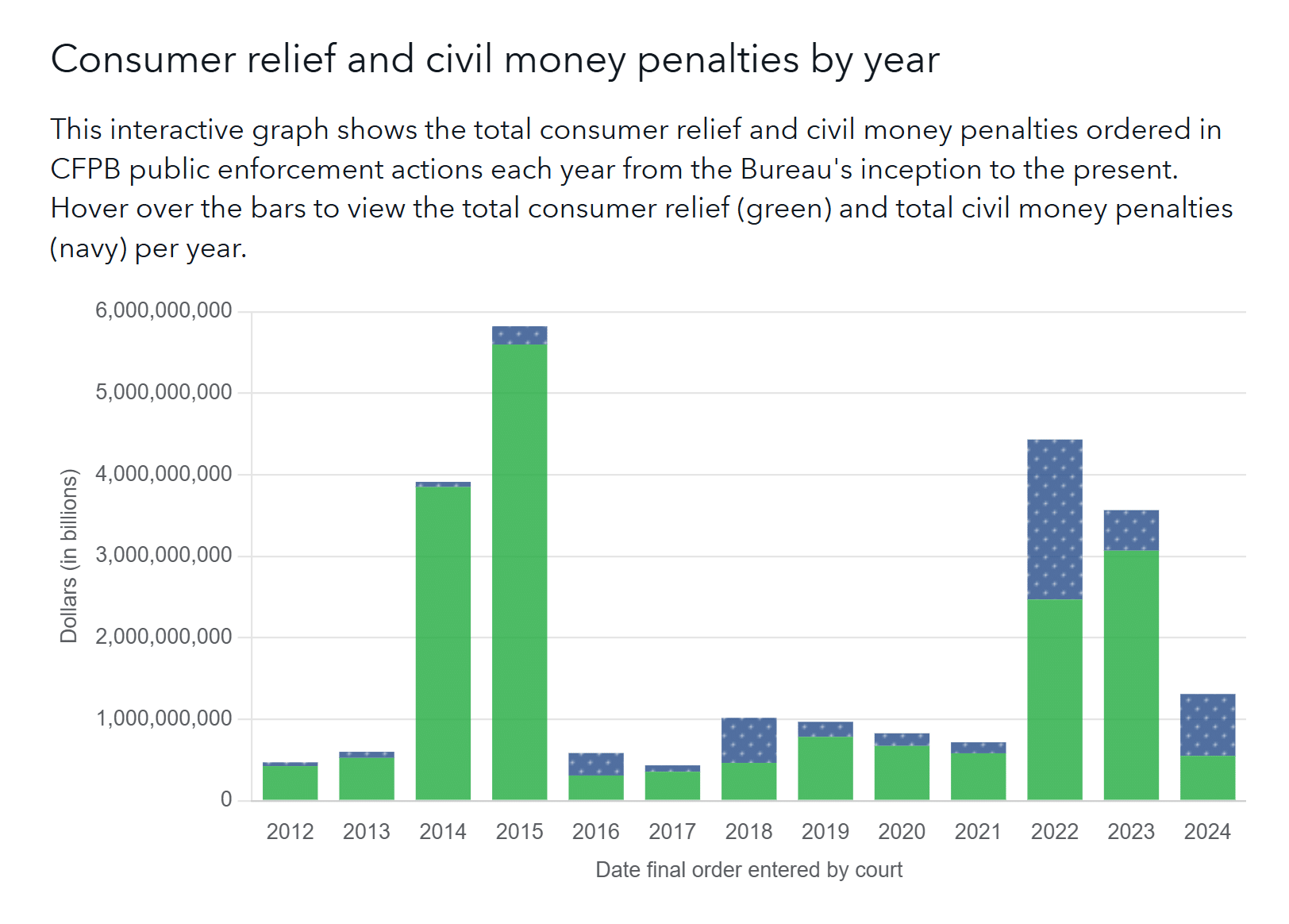
Court documents reveal a shocking plan to effectively eliminate the consumer protection agency that recovered $6.69 billion for Americans over the last 4 years alone.
Internal communications exposed in federal court show Vought planned to reduce the CFPB workforce from 1,700 employees to as few as "five men in a room." The agency's headquarters has been closed, with employees instructed: "Do not perform any work tasks."
Adam Martinez, CFPB chief operating officer, admitted in court filings that he described the agency as in "wind down mode" with plans for "closure of the agency." A Trump administration official even attempted to return agency funds to the Federal Reserve, only to discover they lacked legal authority to do so.
The National Treasury Employees Union has sued to halt the mass firings and data purging that would have occurred under Vought and Elon Musk's Department of Government Efficiency. U.S. District Judge Amy Berman Jackson has maintained an order prohibiting mass firings while the case proceeds.
Covering Their Tracks
When the illegality of their shutdown plan became apparent, CFPB leadership began a hasty retreat. Over the weekend, acting chief legal officer Mark Paoletta emailed employees claiming they should have been performing "statutorily required work" all along – despite previous clear instructions to stop all work.
Judge Jackson expressed skepticism about this sudden reversal during a hearing Monday, asking government attorneys if they were trying to "starve [the CFPB] to death" rather than "blow it up." She questioned whether consumer protection was "inconsistent with policy priorities of this administration."
The Justice Department lawyer representing the CFPB leadership responded, "I don't know the answer to that question, your honor."
Matthew Pfaff, who oversees the CFPB's consumer complaints database, filed a declaration calling Martinez's claims that statutory work had resumed "misleading, inaccurate, or both." Another employee called internal emails suggesting work had restarted "a somewhat transparent effort—in advance of a hearing in this Court—to create the appearance that statutorily required work is taking place across the Bureau when in fact it is not."
Targeting Consumer Protection Functions
The dismantling has specifically targeted core consumer protection functions. The agency went so far as to set up a tip line for financial companies to report any CFPB officials engaged in supervision or enforcement – essentially encouraging corporations to inform on regulators attempting to do their legally mandated job.
Multiple statutory offices that are part of the CFPB remain non-operational, including the Office of Servicemember Affairs, Office for Older Americans, Office of Financial Education, Office of Community Affairs, and Office of Student Loan Ombudsman.
This reduction in oversight comes as financial fraud continues to rise nationally.
Banks Celebrate as Consumers Lose Protection
Financial institutions have welcomed the agency's retreat. After the Zelle lawsuit dismissal, Lindsey Johnson, president of the Consumer Bankers Association, an organization whose mission is to maximize bank profits at the expense of consumers, released a statement saying, "Banks have consistently followed the law in offering services through Zelle."
Critics argue the administration's actions represent a betrayal of campaign promises to protect average Americans. The absence of CFPB oversight creates an environment where financial scammers, including third-party payment systems and cryptocurrency fraudsters, can operate with reduced scrutiny.
Judge Jackson has ordered an evidentiary hearing for March 10, where Martinez must testify personally. She cited concerns that agency leadership was making statements with "people's fingers crossed behind their backs."
Legal experts note that while Trump officials may want to eliminate the CFPB entirely, doing so legally would require an act of Congress. As congressional Republicans lack the votes for such action, the administration appears to be attempting to achieve the same outcome through executive action – a strategy now facing serious legal challenges.