
From “MAGA Antitrust” to Bush-Era Bonanza: The Great Reversal That’s Costing You Money
The Trump administration promised a populist war on monopolies, but it now appears to be a bait-and-switch. Politically-connected lobbyists and corporate cronies are calling the shots, gutting cases against corporate giants and leaving you to pay the price. Discover the backroom deals and political favors that are killing consumer protection.
August 11, 2025, 12:20 pm
By Uprise RI Staff
Remember earlier this year when Wall Street was afraid of Donald Trump’s antitrust enforcers? It seems like a lifetime ago. Last December, Trump himself tweeted that “big tech has run wild for years,” promising he’d “make America competitive again.” There was real fear in boardrooms that Joe Biden’s aggressive antitrust enforcement would continue under Trump.
These days, that fear has vanished, replaced by a joyful sigh of relief. On CNBC, the home of market cheerleading, the mood has shifted entirely. “We have to realize it’s a brand new world, post-Lina Khan,” said host Jim Cramer, referring to the former progressive Federal Trade Commission (FTC) Chair. Under Khan, corporate giants were like “Prometheuses,” bound and held to account. Now, Cramer noted, they are unbound.
Wall Street’s celebration is rational. The populist promise of a “MAGA Antitrust” regime has disintegrated, revealing an administration that looks stunningly similar to that of George W. Bush—an era when corporate power was championed and consumer protection was an afterthought. But it’s worse than that. This isn’t just about bad policy; it’s about a deliberate pivot to a pay-to-play system where justice is for sale and corporate behemoths get favorable treatment by hiring Trump’s friends and pushing a conservative agenda. The goal is no longer to break up corporate power, but to fuse it with the Republican state.
For American families, this isn’t an abstract debate. Strong antitrust enforcement is what keeps prices fair for everything from groceries and cell phone plans to concert tickets and prescription drugs. It ensures you have choices, protects workers from exploitation, and holds massive companies accountable when they lie, cheat, and steal. When that enforcement vanishes, you pay the price.
The Bush-Era Playbook Returns

To understand how bad things are getting, we need to look back at the George W. Bush administration. His enforcers didn’t just go easy on monopolies; they actively worked to protect them. Over eight years, they didn’t bring a single major case to break one up. They argued in court—all the way to the Supreme Court—that corporations owning monopoly networks should have the right to exclude rivals. In the 2004 case Trinko v. Verizon, the court agreed in a decision that was a “love letter to corporate monopolies.” Justice Antonin Scalia wrote that having a monopoly and charging monopoly prices “is an important element of the free-market system.”
This legal framework unleashed the corporate consolidation that defines our economy today, especially in big tech. Bush’s team even published a report basically endorsing monopolization as a good business practice. The message was clear: corporate power is good, and the government’s job is to get out of the way.
The Biden administration’s enforcers, Lina Khan at the FTC and Jonathan Kanter at the Department of Justice (DOJ), broke dramatically from this tradition. They resurrected laws to fight monopolies, suing giants like Google, Amazon, Apple, and Meta. They wrote new rules to ban junk fees and non-compete clauses that trap workers in low-wage jobs. For the first time in a generation, it felt like someone was fighting for the little guy. In fact, many consider Khan to be one of the most effective government department heads in generations.
Trump’s team initially talked a big game, promising to continue this populist fight. But the talk was hollow. The administration that once looked fierce has “turned into Bush-style establishment types.”
From Populist Promises to Political Payoffs
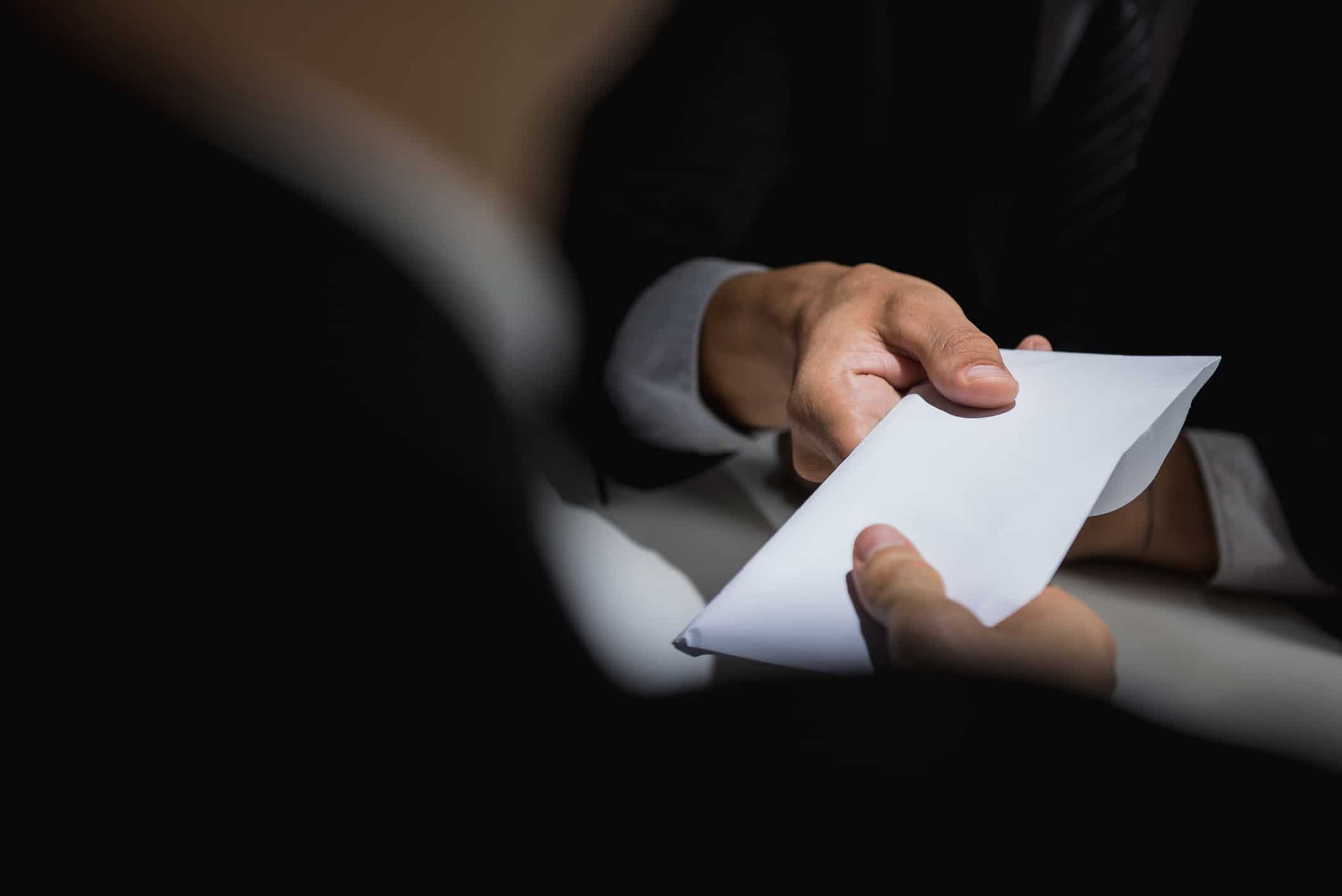
The reversal has been swift and brutal. The new watchword isn’t competition; it’s connections. A recent Wall Street Journal report detailed how companies facing antitrust lawsuits are now rushing to hire lawyers and lobbyists with close ties to President Trump to secure favorable deals.
Take the case of Hewlett Packard Enterprise’s (HPE) $14 billion plan to buy its rival, Juniper Networks. This merger would reduce the number of major companies selling large-scale wifi systems from three to two—a textbook illegal merger. Initially, Trump’s DOJ challenged it, shocking Wall Street. But then the political insiders got involved.
HPE hired a slew of Trump allies, including Mike Davis, a longtime loyalist, and Arthur Schwartz, a strategist close to Donald Trump Jr. Suddenly, the case was settled on terms so weak that HPE’s CEO went on CNBC to brag about how little it mattered. The settlement forced HPE to sell off a tiny, irrelevant part of its business. Tellingly, not a single staff attorney at the DOJ signed the settlement—a massive red flag indicating that the professional lawyers who built the case thought it was a sham.
This isn’t an isolated incident.
* Live Nation (Ticketmaster), facing a massive lawsuit for its monopoly over live events, hired Trump confidant Richard Grenell for its board of directors and also brought on lobbyist Mike Davis.
* American Express GBT hired Brian Ballard—a lobbyist who raised $50 million for Trump’s campaign—right before the DOJ dropped its lawsuit seeking to block a major acquisition.
* Thoma Bravo, a private equity firm whose company RealPage is being sued for using software to illegally fix apartment rent prices, also hired Ballard to lobby on competition issues.
The message is clear: legal merits don’t matter as much as who you know. The Trump administration has signaled that it’s “open for business to the highest bidder.” This shift is perhaps best exemplified by the saga surrounding Paramount, the owner of CBS. As owner Shari Redstone tried to sell the company to Oracle billionaire and Trump ally Larry Ellison—a deal that got government approval last week—strange things started happening. Paramount fired anti-Trump comedian Stephen Colbert, restructured 60 Minutes, and allegedly gave free advertising to the right. It looks less like business and more like a tribute paid for political protection. And it worked.
The Enforcers: A Cynic and a Captive
Overseeing this collapse are two key figures: FTC Chairman Andrew Ferguson and DOJ Antitrust Chief Gail Slater.
Ferguson, a former McConnell staffer with ambitions for the Supreme Court, is a savvy political operative. But he appears to have no real interest in antitrust law beyond its use as a political weapon. Under his leadership, the FTC is in a state of what can only be described as a corporate crime purge.
* He approved an illegal merger between two advertising giants, seemingly conditioned on them making sure their clients advertise on conservative media outlets.
* He dropped a case against PepsiCo for using its power to screw over small, independent grocers, sealing the complaint from public view.
* He reversed enforcement actions against oil executives who had allegedly colluded with OPEC.
* He appears to be dropping a case against Grand Canyon Schools, a “massive school accused of deceiving its students.”
Worse, Ferguson is rolling back the transparency Khan brought to the FTC. He has canceled open public meetings where ordinary citizens could voice their concerns directly to commissioners, cloistering the agency once again behind closed doors. He avoids trials, where a judge can review his actions, preferring backroom settlements that serve a political agenda.
At the Department of Justice, Gail Slater appears to be a different story. Described as someone who genuinely sees value in populism and is not a cynic like Ferguson, she has nevertheless been outmaneuvered and rendered ineffective. She seems to be under siege by Trump loyalists. After she and her deputies objected to the politically-connected lobbyists handling the HPE settlement, her two top deputies were fired.
Since then, the DOJ has been bleeding staff and credibility. Slater overruled her own staff to approve the Discover/Capital One merger, a deal that will dominate the credit card market for low-income Americans. She issued a bizarre statement admitting that T-Mobile’s purchase of U.S. Cellular was illegal and would cement a cell phone oligopoly—but allowed it anyway.
The era of “Number Go Up,” where the only thing that matters is the stock market’s assent, is back with a vengeance. The law itself might not get worse, because Ferguson and Slater aren’t litigating cases to set bad precedent. But by simply refusing to enforce the law, they are allowing the economy to consolidate at a terrifying pace.
The recent reinstatement of Democratic commissioner Rebecca Kelly Slaughter to the FTC offers a glimmer of hope. Her first act was to propose reinstating the “Click-to-Cancel” rule to stop companies from trapping you in subscriptions. But with a Republican majority and a Supreme Court likely to affirm Trump’s power to fire commissioners at will, her influence will be limited.
For now, Wall Street is right to feel joyful. The watchdogs have been muzzled, the corporate titans are unbound, and the American consumer is left to foot the bill.
Was this article of value?
We are an reader-supported publication with no paywalls or fees to read our content. We rely instead on generous donations from readers like you. Please help support us.