

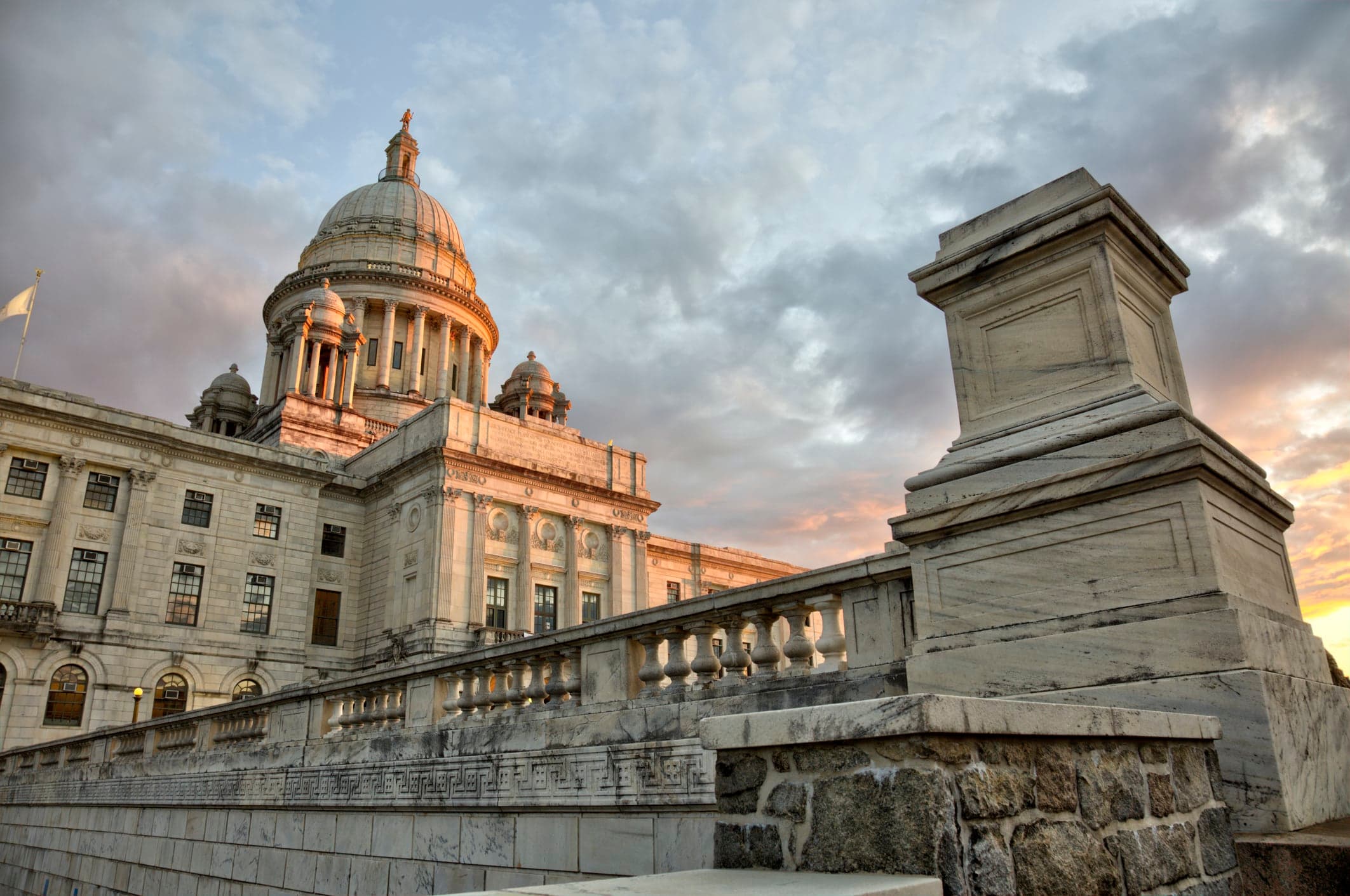
Governor Dan McKee's State of the State address sparked controversy Wednesday night when his administration blocked public access to the Rhode Island State House rotunda and restricted press coverage through an unprecedented show of police force.
The governor's office deployed Rhode Island Capitol Police and State Police to prevent protesters and independent journalists from accessing the building's upper floors and rotunda area - a public space that remained conspicuously empty throughout McKee's speech.
According to independent journalist Steve Ahlquist, police allowed corporate television crews to move freely through the building while threatening independent reporters with arrest if they attempted to access the same areas. The selective enforcement raised serious constitutional concerns about press freedom and equal access.
"How an event is photographed or recorded is a news judgment that should be left to an independent press corps, not the government," said Tim White, chief investigative reporter at WPRI and former board member of the New England First Amendment Coalition. "The effect is a form of censorship, and the public pays the price."
The restrictions appeared aimed at limiting coverage of planned protests by housing advocates and community groups who gathered to voice opposition to McKee's policies on homelessness and economic inequality.
Harrison Tuttle, president of the Black Lives Matter RI PAC, said he was personally threatened with arrest after attempting to access the second floor. "This is an action I would expect in a conservative red state," Tuttle said. "The governor is effectively determining where Rhode Islanders can use their voice talking about the issues that pertain to their lives."
When questioned about the restrictions, McKee's office offered shifting explanations. Press Secretary Olivia DaRocha initially claimed cameras were banned due to a "miscommunication resulting from a transition in staff" - an explanation that raised eyebrows given that McKee's communications director has remained unchanged since he took office.
The governor's spokesperson Laura Hart later attempted to justify the rotunda closure by claiming the space "can be and has been reserved many times for events as it was for tonight's State of the State address." However, observers noted the rotunda remained vacant throughout the speech.
House Speaker K. Joseph Shekarchi distanced himself from the controversial decisions, with his spokesperson Larry Berman stating they "were never informed by the governor's office that they weren't allowing cameras in the room." Shekarchi later said he would not have restricted either the rotunda or cameras, noting such actions "breed mistrust among the media and advocates."
State Representative David Morales condemned the governor's actions: "I found it absolutely shameful that the Governor's Office would intentionally create barriers to prevent community members from exercising their right to advocate, especially during a time where our most vulnerable feel ignored by their government."
The protesters, who had planned to gather in the rotunda, were forced to relocate to the State House's Bell Room on the first floor. There, they spent over an hour sharing public testimony about the need for emergency measures to protect unhoused residents from extreme cold and calling for increased taxes on Rhode Island's wealthiest residents to address budget shortfalls.
Ahlquist reported that when protesters began marching and chanting - their voices echoing through to the House Chamber - police kettled them in the Bell Room, declaring their constitutionally protected protest "unlawful" despite its peaceful nature.
John M. Marion, executive director of Common Cause Rhode Island, noted that while the U.S. Congress does restrict camera use on its floor, such restrictions are unusual in Rhode Island. "The media needs to be able to report everything that happens, and that includes the reactions of the legislators in the audience and the other dignitaries in the room, as well as any protests that may happen."
The incident highlights growing tensions between McKee, a Republican who like many conservative RI politicians runs as a Democrat, and advocates for government transparency. This incident raises serious questions about the use of state police power to shield elected officials from public criticism and independent media coverage.