

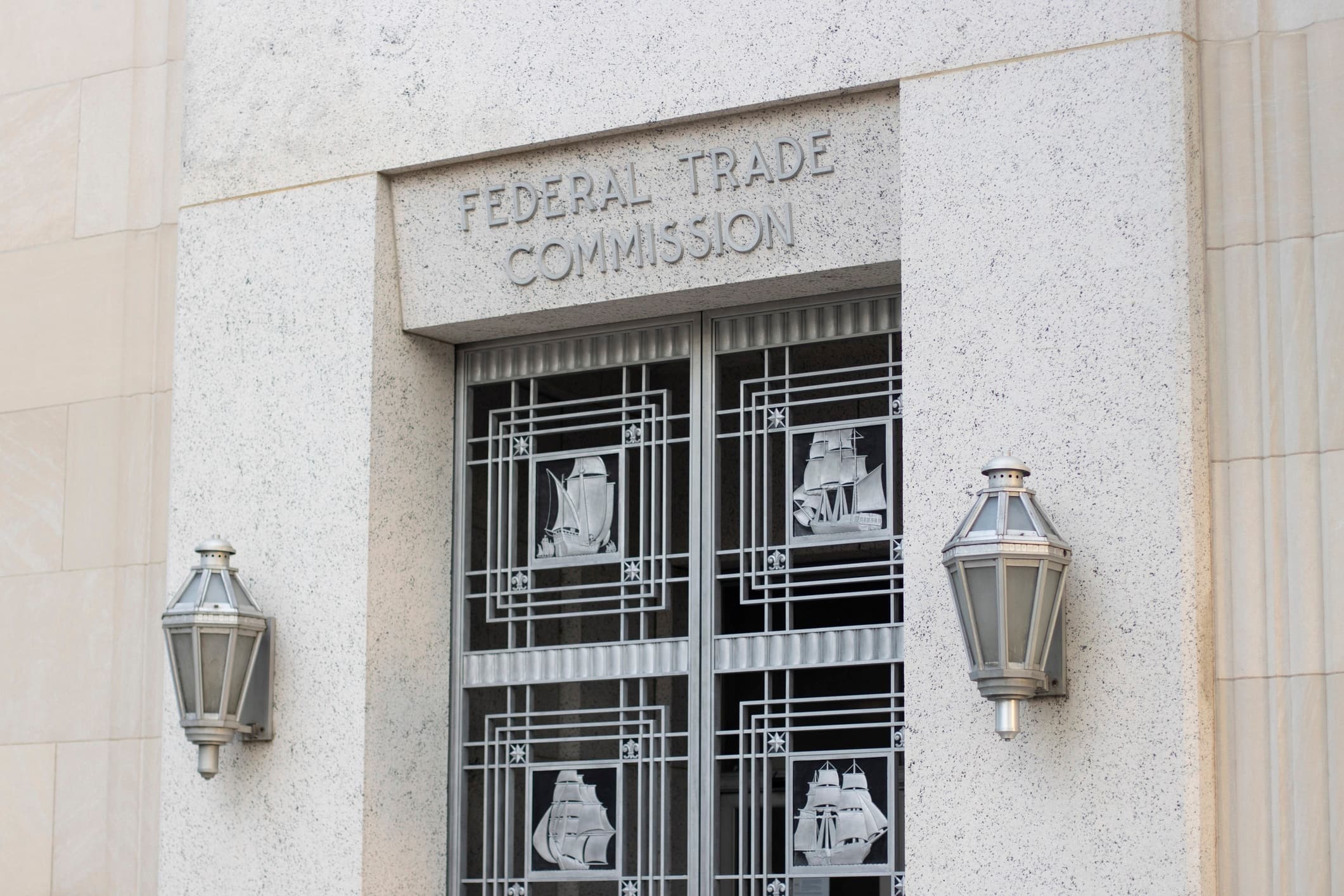
In a seismic shift that has Wall Street power brokers reeling and consumer advocates celebrating, the Trump administration announced its decision to maintain the Federal Trade Commission's strict merger guidelines established under the Biden administration — a move that signals the emergence of a new bipartisan consensus against corporate monopoly power.
Federal Trade Commission Chair Andrew Ferguson sent a decisive memo directing staff to continue evaluating mergers using the 2023 guidelines. Acting Assistant Attorney General for the Antitrust Division Omeed Assefi quickly followed suit, cementing a dramatic reversal from decades of permissive merger policy that had allowed unprecedented corporate consolidation across American industries.
The Trump administration has already demonstrated its commitment to aggressive antitrust enforcement. In a bold move that shocked tech industry executives, the Department of Justice filed suit to block a $14 billion merger between Hewlett Packard and Juniper Networks in late January. This action, combined with the administration's embrace of the strict merger guidelines, has sent corporate dealmakers scrambling to reassess their consolidation strategies.
"We're seeing a fundamental realignment of antitrust philosophy that crosses traditional political boundaries," said Matt Stoller, a leading antitrust researcher and writer. "The intellectual and political argument about corporate consolidation is effectively over. There's no going back to the era of unchecked merger mania."
The impact on merger activity has been swift and significant. January saw a 30% drop in merger activity compared to the previous year. While multiple factors contribute to this decline — including higher financing costs and tariff uncertainties — the bipartisan embrace of strict merger guidelines has created a chilling effect on corporate consolidation plans.
A Historical Shift
The current situation represents a dramatic departure from four decades of relaxed merger oversight that began during the Reagan administration. In 1982, Reagan's antitrust chief, Bill Baxter, orchestrated a fundamental shift in merger policy that would reshape the American economy.
Baxter, influenced by Chicago School economists George Stigler and Richard Posner, believed that bigness equated to efficiency and that market forces would naturally prevent monopolistic abuse. Unable to change the Clayton Act through Congress, Baxter instead modified the guidelines agencies use to oversee mergers — an administrative workaround that opened the floodgates to corporate consolidation.
The results of this policy shift proved devastating for American consumers and workers. Industries from airlines to pharmaceuticals experienced wave after wave of mergers, leading to higher prices, reduced service quality, and diminished competition. The 2008 financial crisis, triggered in part by "Too Big to Fail" banks, began to crack the foundation of this permissive approach to corporate consolidation.
The Rise of Neo-Brandeisian Antitrust
The intellectual groundwork for today's stricter approach to merger control emerged in the aftermath of the 2008 crisis. A new generation of legal scholars and policymakers, led by figures like Lina Khan, began questioning the Chicago School's permissive approach to corporate concentration.
Khan's influence proved particularly significant. After graduating college during the financial crisis, she documented monopolistic practices across various industries, from candy manufacturing to airlines. Her work helped spark a broader reconsideration of American antitrust policy that would eventually influence both Democratic and Republican thinking on corporate power.
The Biden administration's appointment of Khan to lead the FTC marked a turning point. Under her leadership, the agency developed new merger guidelines that aligned more closely with the original intent of antitrust laws rather than the speculative economic theories that had dominated policy since the 1980s.
Surprising Conservative Support
Perhaps most surprising has been the growing conservative support for stricter merger control. At a recent Federalist Society event, influential right-wing scholar Todd J. Zywicki described the new guidelines as "moderate" and "reasonable" — a stark departure from traditional conservative skepticism toward government regulation of business combinations.
Even Steve Bannon, former Trump strategist, now describes himself as a "neo-Brandeisian" who believes Khan should have been granted more authority. This shift reflects a broader conservative rethinking of market concentration and its effects on American communities.
Wall Street Pushback
The financial sector's response to the Trump administration's embrace of strict merger guidelines has been overwhelmingly negative. Merger arbitrage specialists, whose profits depend on corporate consolidations, have expressed particular alarm. Big tech lobbyists and Silicon Valley venture capitalists have joined the chorus of opposition.
The Information Technology & Innovation Foundation, a tech industry lobbying group whose clients include most tech monopolies, released a statement claiming the guidelines would "harm innovation, competition, and consumers." However, such arguments appear to carry less weight than in previous years, as both parties increasingly recognize the negative effects of corporate consolidation on American consumers and communities.
Implementation Challenges
Despite the bipartisan consensus on merger guidelines, significant challenges to implementation remain. The Trump administration's mass layoff event across the federal workforce could hamper the government's ability to effectively enforce these guidelines. Some observers speculate this staffing shortage might represent an intentional strategy to create the appearance of tough antitrust policy while lacking the resources to pursue cases effectively.
Adding to the complexity, FTC Chair Ferguson has moved to sever ties with the American Bar Association's Antitrust Section, citing alleged "far left" leanings — though the organization has historically favored corporate interests and opposed stricter merger control.
Judicial Support and Legal Framework
Courts have increasingly found the new merger guidelines persuasive. In recent cases involving major mergers like Kroger-Albertsons and Tapestry-Capri, ten courts have referenced the guidelines favorably, suggesting growing judicial acceptance of stricter merger control.
The guidelines' emphasis on actual market effects rather than theoretical economic models appears to resonate with judges across the ideological spectrum. This judicial support strengthens the guidelines' practical impact and makes them more difficult to dismiss or ignore.
Consumer Impact and Economic Evidence
Research consistently demonstrates the benefits of strict antitrust enforcement. Studies show that aggressive merger control typically leads to increased innovation, greater consumer choice, improved product quality, and lower prices across affected industries.
Previous investigations by Uprise RI have documented the negative effects of monopolies on American consumers, including price increases, reduced service quality, and diminished product choice. The new guidelines directly address these concerns by making it harder for companies to consolidate market power through mergers.
International Implications
The U.S. shift toward stricter merger control could influence antitrust policy globally. European regulators, already known for aggressive antitrust enforcement, may find their approach validated by American policy alignment. This could lead to more coordinated international efforts to control corporate consolidation.
Looking Forward
While questions remain about implementation capacity, the bipartisan embrace of strict merger guidelines marks a significant shift in American economic policy. The era of unchecked corporate consolidation appears to be ending, replaced by a new consensus that market competition requires active government protection.
"The 2023 Merger Guidelines emphasize fidelity to law, reflect modern market realities, and are increasingly being adopted by courts," noted Khan in a recent social media post, acknowledging the "bipartisan commitment to rigorous analysis for policing mergers."
As both parties align on the need to control corporate consolidation, the focus shifts to ensuring effective enforcement. The outcome will significantly impact American consumers, workers, and communities for decades to come.