


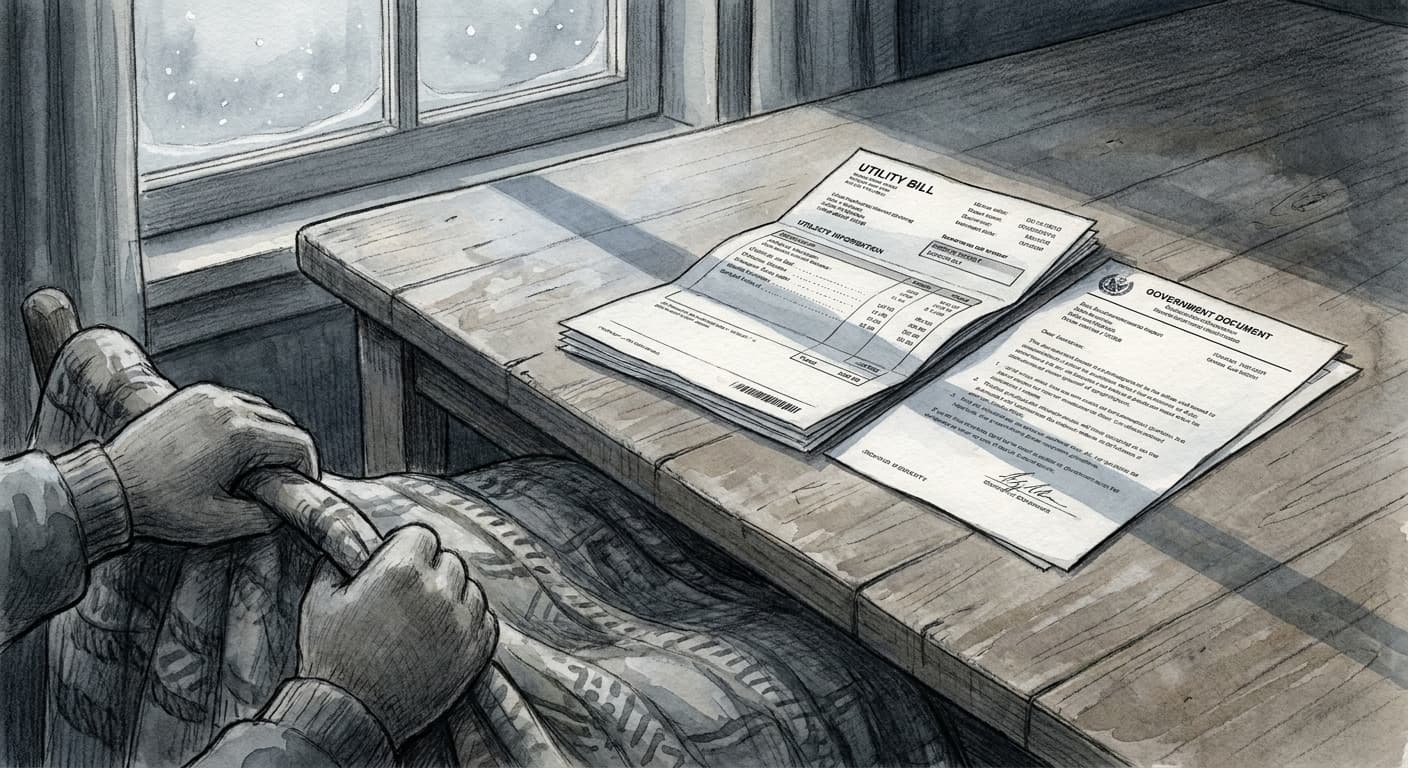
Federal grants run the country. They pave roads, subsidize farms, equip police departments, manage public health, and keep families from freezing. But right now, one specific program—and the 28,000 Rhode Island households that rely on it—is caught in the crosshairs of a massive bureaucratic overhaul.
On May 29, 2026, the White House Office of Management and Budget (OMB) proposed rewriting the rules for how federal grants are awarded. The proposal is titled "Regulation for Federal Financial Assistance" (Docket ID: OMB-2026-0034). It sounds dry. It is not.
When you read through the text overhauling 2 CFR Part 200, the mechanism becomes strikingly clear. The rule aims to convert non-binding administrative guidance into binding regulation over more than $1 trillion in annual federal financial assistance. The proposal introduces a mandatory "pre-issuance review" for discretionary grants.
Who performs this review? A senior political appointee.
Under the new framework, that appointee must sign off on awards to ensure they "demonstrably advance the President's policy priorities" and to certify that taxpayer dollars do not fund, promote, or encourage disfavored policies like Diversity, Equity, and Inclusion (DEI) or gender-related programming. Additionally, Section 200.340 of the proposal grants federal agencies expanded power to simply cancel grants without cause.
One could say this increases transparency and perfectly aligns federal spending with the elected executive. But what it really does is inject a severe, ideological bottleneck into basic safety-net funding.
The Low Income Home Energy Assistance Program (LIHEAP) shows in miniature how this bottleneck works. In Fiscal Year 2024, LIHEAP served over 28,000 Rhode Island households for heating, and over 27,000 for cooling.
Those are massive numbers for a small state. When you break it down, it means tens of thousands of families who simply cannot afford the utility bill sitting on their kitchen table without federal intervention.
Rhode Island’s energy safety net is already incredibly fragile. Last winter, the Rhode Island Department of Human Services (DHS) was forced to delay LIHEAP vendor notifications from November 1 to December 1, 2025. The agency also had to shrink grant sizes. They explicitly blamed the delay on "anticipated changes in federal funding and guidance."
You have to qualify. You have to apply. You have to wait. Now, imagine that waiting period hardwired into a permanent political vetting process.
In April 2026, U.S. Senator Jack Reed (D-RI) led a bipartisan Senate push that successfully forced the administration to release $427 million in withheld FY 2026 LIHEAP funds, shaking loose $2.72 million for Rhode Island. If the OMB rule takes effect, that kind of holdup won't require a political blockade. It will just be standard procedure.
The public comment period for the OMB proposal closed on July 13, 2026, drawing over 53,000 submissions. In their comments, the National Consumer Law Center (NCLC) explicitly warned of critical risks and "unworkable" bottlenecks for both LIHEAP and the Weatherization Assistance Program (WAP).
State officials are fighting back. Rhode Island Attorney General Peter Neronha co-signed a multi-state comment letter on July 13 opposing the rule, arguing it bypasses congressional intent and is illegal under federal law.
Ultimately, these problems are best confronted with law, details, and enforcement. The proponents of the rule claim authority under the Chief Financial Officers (CFO) Act to issue binding regulations. Opponents argue that stripping agencies of flexible, non-binding guidance in favor of rigid requirements replaces administrative expertise with partisan loyalty tests.
In other words, the administration views basic social safety nets as a culture war battleground.
The OMB is targeting an October 1, 2026, implementation date. The legality of the move remains contested, and the courts—where Rhode Island has repeatedly won injunctions against previous executive attempts to restrict grants—will likely have to intervene again.
But as October approaches, the bureaucratic gears are already grinding. The federal grants that run the country, and the funds that keep a family from freezing, may soon require a political stamp of approval.