


Every state but Hawaii keeps a compassionate release law on the books — a promise, at least on paper, that a prisoner who is terminally ill, severely ill, or too old and infirm to pose any threat to anyone can be let out to die in a hospital, a hospice, or a family home rather than in a cell. Rhode Island keeps two such promises: a medical parole statute and, since July 6, 2021, a geriatric parole pathway added by the General Assembly to deal with an aging prison population and the exorbitant cost of caring for it. What a fresh batch of data and one uncomfortable peer-reviewed study make plain is that the promise, here and almost everywhere else, is largely theoretical.
The Prison Policy Initiative on July 22 published its most current state-by-state accounting of how often medical parole is actually granted, drawing on public records from 47 states, the District of Columbia, and the federal system. The picture is one of near-total disuse, and no upward trend to speak of. Florida granted conditional medical release to 45 people in 2019 and 18 in fiscal 2025; Massachusetts, which released 31 in the first COVID year of 2020, granted just 11 in fiscal 2024; New Jersey managed eight over five recent years. In the federal courts, 2,795 motions for compassionate release were filed in fiscal 2025 and 394 — 14 percent — were granted. The mechanism, the analysis concludes, sets an extremely high bar behind a lengthy and confusing process, so that most applicants stay locked up and many die before their cases are ever resolved.
Rhode Island does not even appear in the grant-rate table — a small absence that says something. The state, so far as the public record shows, does not report how many medical or geriatric parole applications it receives or how many it grants. That alone is worth a question or two up on Smith Hill.
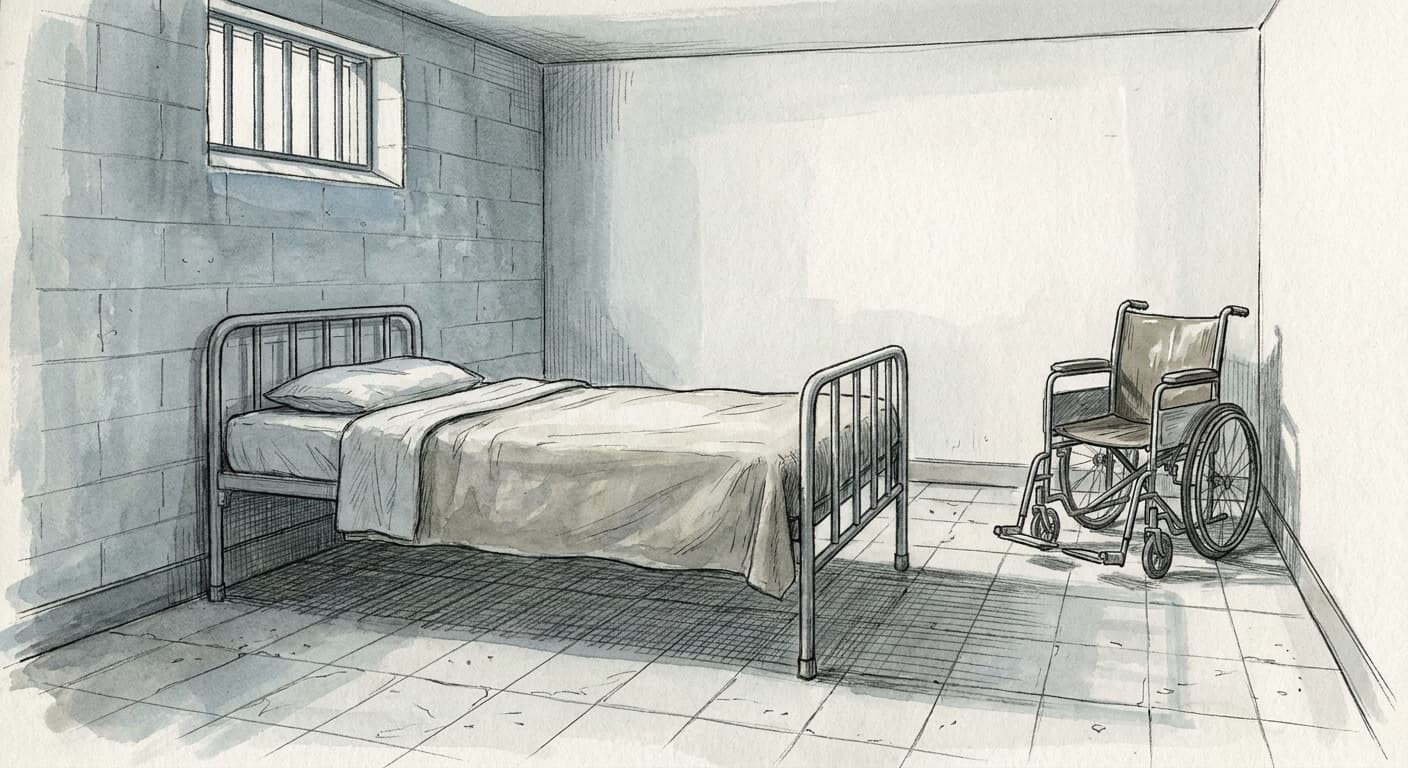
Local sponsorWorld-class website design at a small business priceCompany 50But the harder Rhode Island problem is not the front door. It's the back one. Even when the parole board — the body statutorily required under RIGL § 13-8.1-4 to secure "an appropriate placement" before anyone walks out — says yes, the yes goes nowhere. As of June, at least three prisoners granted release to tend to their medical needs were living indefinitely in the prison infirmary because long-term care facilities were unwilling to accept them, primarily because of their criminal backgrounds, the state parole authority acknowledged. The board did its job. It vetted them, judged them no danger to anyone, approved them. And they remained behind bars anyway.
Why that happens is no longer a matter of anecdote. A study published October 28, 2025 in Scientific Reports ran secret-shopper calls to all 74 licensed nursing homes in the state, describing a standardized 78-year-old man with diabetes and COPD who could pay privately — and then, on a second pass, mentioning he'd be arriving from prison on compassionate release. The medical need and the money never changed. Only the disclosure did. Of the 61 homes reached, the share reporting a bed within a month fell from 52.5 percent to 26.2 percent. Flat rejections climbed from 9.8 percent to 44.3 percent. Facilities were 3.41 times more likely to downgrade the admission once incarceration came up, and for a patient with a serious criminal offense the rejection rate hit 70.5 percent. Facility size made no difference — meaning the reflex is statewide, not the quirk of a few small homes.
Four states — Connecticut, Georgia, Massachusetts, and Vermont — have simply stopped relying on the goodwill of individual homes and instead contract with nursing facilities to take these patients, according to FAMM, with one operator, iCare Health Network's MissionCare Health, holding contracts in three of them. Rhode Island has no such arrangement. It hands the discharge-plan requirement to a market that the evidence shows will not cooperate, and then, when the market refuses, leaves the approved patient in a cell in the infirmary — which, incidentally, costs the taxpayer more than the community bed would have.
The law says these people may go home to die. The problem is that Rhode Island built the door and never checked whether anything was on the other side of it. Right now, three men are learning that the difference between a compassionate law and a compassionate outcome is a bed nobody will offer — served up as a promise al dente and left to go cold on the plate.