


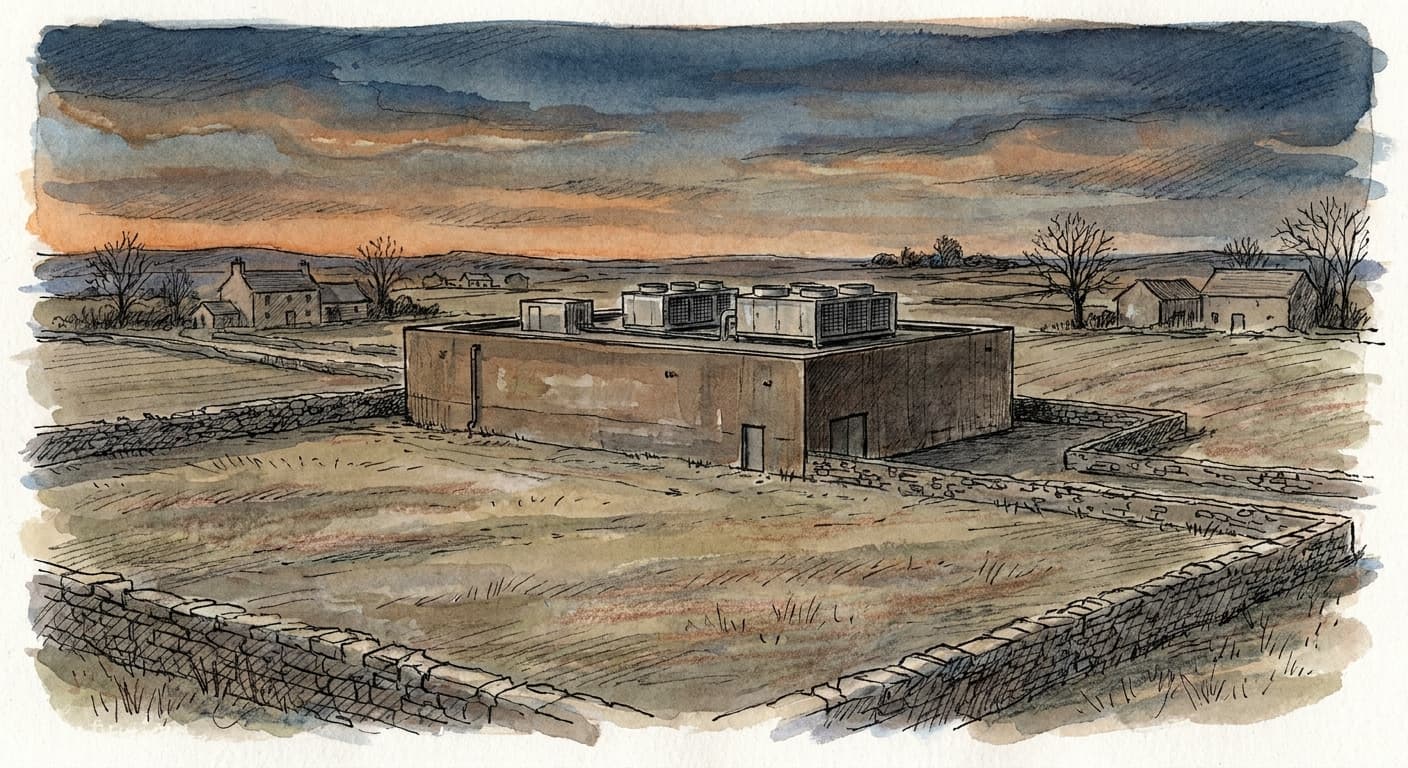
The Hopkinton Town Council voted at its July 8 meeting to ask the town's planning board and planning department to draft a zoning amendment that would prohibit data centers anywhere in town, rejecting a more cautious, temporary approach some neighboring communities have taken.
The request, sponsored by Vice President Robert Burns, directs planning staff to study the issue and return with a recommendation for a permanent prohibition rather than a time-limited holding pattern. According to the Hopkinton Town Council's published meeting recording, the council modified its motion during discussion specifically to remove any reference to an "interim" measure, instructing planning officials to pursue a full ban across all zoning districts.
The topic reached the council after a resident emailed members pointing to other Rhode Island communities that have moved ahead of Hopkinton on the issue. Burns told the council he had also spoken with a member of the Smithfield Town Council, which has adopted what its own ordinance describes as an interim control on data centers rather than a permanent ban. Burns said Smithfield officials are still "going through some growing pains" with developers pursuing large-scale facilities there.
Local sponsorWorld-class website design at a small business priceCompany 50A Hopkinton resident who addressed the council, and who council members thanked for raising the issue, urged the town not to be caught unprepared. He said he did not want Hopkinton to be "the last person standing in the musical chairs game" if a developer proposed a data center locally, and pointed to Smithfield's ordinance as a useful model because of how it defines what counts as a data center.
Asked by a council member to explain, for the public record, why data centers are drawing scrutiny, the resident summarized roughly a half-dozen concerns raised in Smithfield's staff analysis: electric demand on utility infrastructure, water demand from cooling systems, noise from mechanical equipment, land-use compatibility with surrounding properties, and visual character. He noted that water-cooled data centers can require far more water than any other use currently permitted in town, and that the water used in the cooling process can become contaminated and require additional treatment — a resource demand he said no other permitted use in Hopkinton comes close to matching.
Council members were clear they did not want to follow Smithfield's interim-control approach, under which the ordinance does not permanently bar the facilities while the town studies the question further. "I don't think we need to do more studying," one council member said during the discussion, a sentiment echoed by other members who said they would not support a temporary measure.
The town solicitor explained the procedural path forward: under state zoning law, an amendment to a town's zoning ordinance can only move forward if either a property owner formally petitions for it or the planning board forwards a proposed amendment to the council. By voting to refer the matter to the planning board, the council started that second track, which the solicitor said was the fastest route to getting an ordinance in place. The planning board's recommendation would then come back to the council, which would have to hold a public hearing before voting on any final zoning change — meaning Wednesday's vote is a preliminary step, not the enactment of a ban.
The solicitor also cautioned that a more deliberate process, even if it takes several meetings, tends to produce zoning language that holds up if challenged later. He compared the situation to the town's handling of a proposed trash-to-energy plant in the 1980s, when the council took time to examine traffic, truck size and environmental factors before acting, rather than adopting a quick blanket denial.
The council's motion passed by voice vote. No timeline was given during the meeting for when the planning board might return with a draft ordinance, and no draft language has yet been made public. Residents who want to track the amendment's progress can watch for it on future planning board and town council agendas, which the town posts ahead of scheduled meetings.