


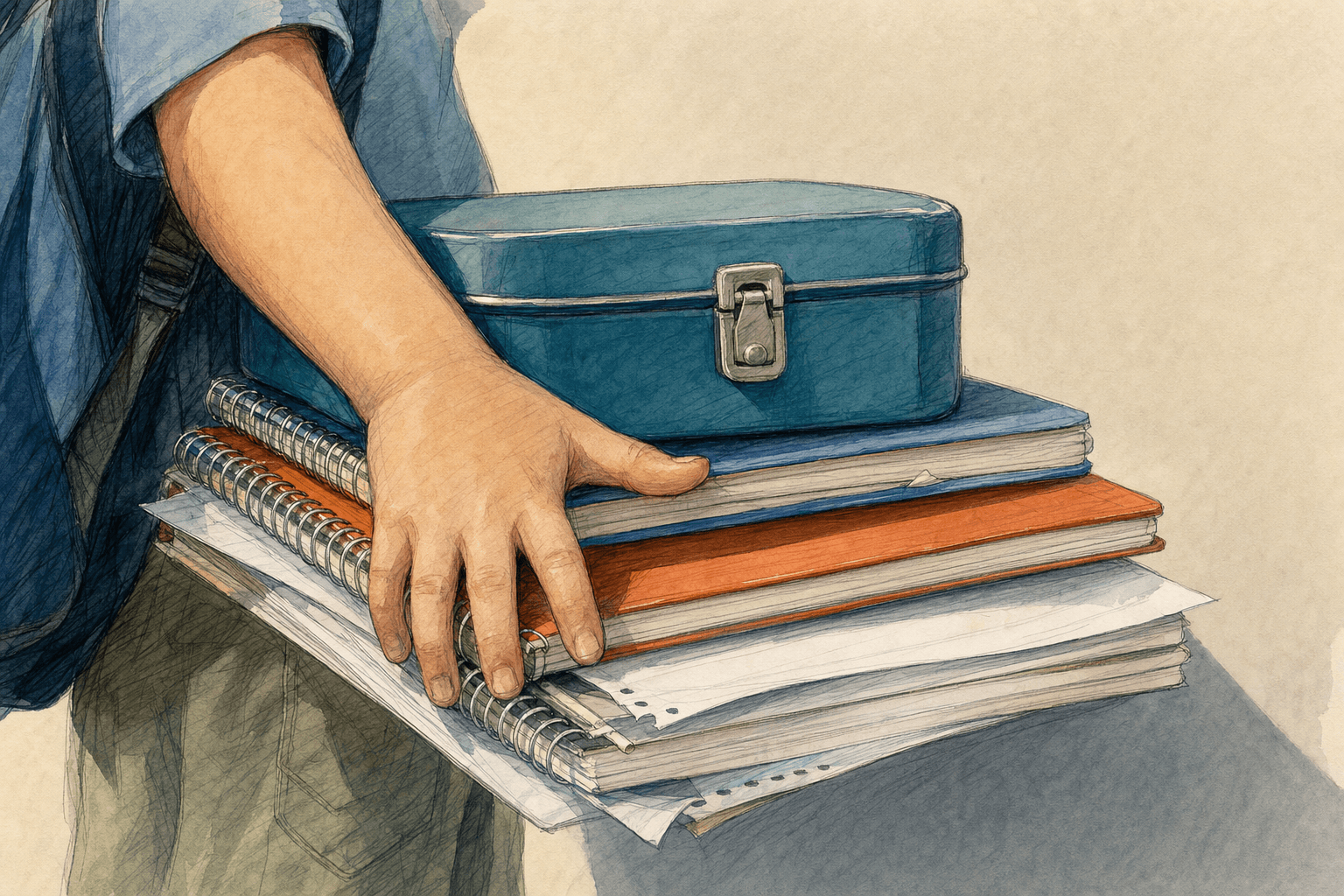
There are a lot of ways to talk about the cost of living in Rhode Island right now — rent, electric bills, groceries, health insurance premiums. Let me narrow to something smaller and more immediate: the list your kid's teacher sent home.
Notebooks. Index cards. A lunchbox. Loose-leaf paper. That list is the one household expense you cannot negotiate, defer, or shop your way out of, and this year it costs meaningfully more than it did last August.
A joint analysis released July 27 by the Groundwork Collaborative and The Century Foundation found that the 2026–27 school year will cost families close to $4,000 per child — 10.7 percent more than last year. Break it apart and the pressure comes from two directions at once. A typical basket of school supplies runs 7.7 percent more than a year ago. A typical basket of lunch items runs 10.9 percent more.
Local sponsorWorld-class website design and custom software at a small business price.Company 50The specific items are where it stings. Lunchboxes are up 26.8 percent. Notebooks, 23 percent. Index cards, 22.2 percent. Notebook paper, 20 percent. A loaf of sandwich bread now averages $4.36, up 21.8 percent. Blueberries — a lunchbox staple in a lot of houses — jumped 48 percent, which the analysis attributes to poor growing conditions and higher fuel costs. Highlighters, pens and markers, for what it's worth, went up only modestly. Cold comfort when the notebook is the thing on the list.
For scale: overall U.S. inflation is running around 3.5 percent. These increases are three to seven times that.
Why the paper aisle, specifically?
Because much of it is made somewhere else. The two organizations attribute the gap between school-supply inflation and general inflation partly to tariffs on imported goods, with families absorbing at least some of the added cost. That claim isn't just think-tank framing — the companies have said it themselves. Newell Brands, which makes Sharpie, Paper Mate, Expo and Elmer's, absorbed $174 million in tariff costs in 2025 and expects another $130 million hit in 2026. Logitech, which makes classroom headphones, told investors it responded with "a sizable price increase in the United States."
Tariffs aren't the only mechanism. Wholesale plastic prices are up 20 percent since February as oil prices spiked, which lifts the cost of anything made from or packaged in plastic. Demand from AI data centers has pushed up memory and storage prices, so even budget laptops can run $100 more than usual. Fuel costs move produce. Untangling exactly how much each factor contributes isn't something the analysis does, and I'm not going to pretend otherwise.
Here's the part that's specific to us.
Rhode Island does not have a back-to-school sales tax holiday, and will not have one in 2026. Every notebook, backpack and pair of sneakers bought here in July and August is taxed at the standard 7 percent statewide rate. Eighteen states run tax-free periods. Massachusetts holds its weekend August 8–9. Connecticut's runs August 16–22. Both are a short drive from most of this state.
That matters in dollars. On a $500 back-to-school run — roughly what the JLL survey found middle-income families budgeting per child this year, after raising budgets about 20 percent to $495 — the 7 percent tax is $35. Nationally, about 26 percent of back-to-school shoppers say they plan to lean on their state's tax-free days, according to NerdWallet's survey of parents. Rhode Islanders don't have that lever. It's a policy choice, not weather.
The strain shows up in how families are paying. Nearly half of parents — 45 percent — said they plan to take on debt to afford back-to-school shopping this year, per the Groundwork/Century analysis. Roughly half told Deloitte they're cutting other household expenses to make room.
None of this lands on a state that was coasting. Federal Joint Economic Committee data put the average Rhode Island household at $991 more per month for the same basket of goods and services as in January 2021 — $28,555 cumulatively. And during the 2024-25 school year, Rhode Island school personnel identified 1,994 students as homeless, a 36 percent increase from 2021-22. For those families, a 27 percent jump in the price of a lunchbox isn't a budgeting inconvenience.
What actually reduces the bill
Buy against the list, not the aisle. Roughly one in five shoppers is seeking out free supply options and 19 percent are buying at least some clothing secondhand. Discounters are absorbing the shift — Walmart surged 22 percentage points to nearly 80 percent of back-to-school shoppers, the highest any retailer has hit in JLL's survey history, and dollar stores broke into the top ten for the first time. One-stop shopping is over; comparison shopping is the strategy.
And if you're already planning a trip over the line the second week of August, the tax math is simple. Rent, electric bills, groceries — and now index cards.