


Governor Dan McKee ceremonially signed the Rhode Island Warehouse Worker Protection Act at the State House on Monday, July 13, capping a years-long fight between the state's labor unions and its business lobby over how the digital machinery of modern warehousing controls the people inside it.
The governor actually signed the bill into law weeks earlier, on June 18, after it cleared the General Assembly in the final days of the session. Monday was the photo-op — sponsors and labor leaders flanking McKee. But the substance takes effect January 1, 2027, and it aims squarely at the biggest fact of Rhode Island's logistics economy: Amazon's 3.8 million-square-foot robotics fulfillment center in Johnston, PVD2, which opened last July and employs more than 1,500 full-time workers.
So what does the law actually do?
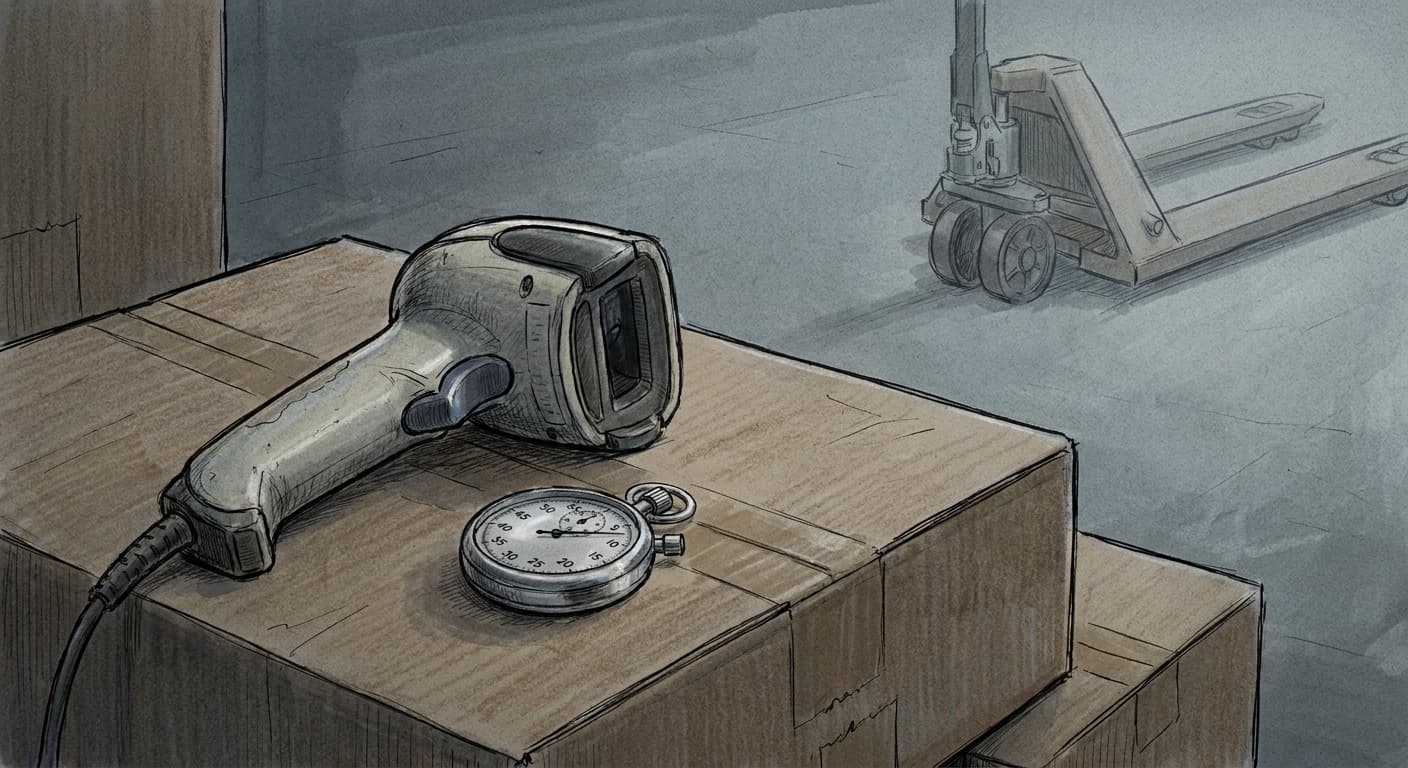
It regulates quotas. In a modern fulfillment center, software tracks nearly every movement a worker makes and hands out precise, second-by-second speed targets for picking, packing, and stowing. Under Chapter 28-61 of the state's general laws, covered employers now have to hand every nonexempt worker, at hiring, a written description of every quota they're subject to — the exact number of tasks in a shift and the discipline that follows a miss. Any new or modified quota has to be disclosed in writing at least 48 hours before it kicks in, and no one can be disciplined for missing that new quota until two days after they've been told about it.
There's more. Workers cannot be held to quotas that prevent them from taking legally mandated meal and rest breaks or using the restroom — including, the bill text specifies, "reasonable travel time" to and from the restrooms. And employees get a new right to request a written copy of their own work speed data, plus the anonymized data of comparable coworkers.
But this isn't a rule for the corner storage unit. The law only reaches employers with 100 or more workers at a single facility, or 1,000 or more statewide. That's a deliberate net — it catches the mega-distributors and lets the small ones alone. Amazon's Johnston center clears it easily. Its Providence delivery station is expected to fall under the statewide threshold. Rhode Island becomes the seventh state to pass a law like this, joining California, New York, Washington, Oregon, Minnesota, and Connecticut.
Here's the part worth sitting with: the version that became law was negotiated with the very companies it regulates. The final "Substitute A" draft added guardrails to soften the compliance load — a 21-day window for employers to answer data requests, a cap of one worker request every 90 days, and a 90-day limit on the rebuttable presumption of retaliation, after which the burden shifts back to the employee. Sponsors worked those changes out in part with major operators, Amazon included. That collaboration is a strong signal Amazon plans to comply rather than sue.
The labor side didn't hide its target. "Amazon and other bad actors... have been wreaking havoc on workers' livelihoods and physical well-being for far too long," said Matt Taibi, secretary-treasurer of East Providence-based Teamsters Local 251, which led the lobbying push. The bill's legislative findings lean on federal data: the warehousing sector logged 4.0 serious injury cases per 100 full-time workers in 2020, more than double the 1.7 average across all private industry.
McKee kept it plainer. "Hard-working people deserve to know exactly what is expected of them," he said. "This law empowers warehouse workers, promotes safety, and sets clear communication standards."
The business community fought hard and lost. The Rhode Island Business Coalition, representing over 6,280 local businesses, told the Senate Labor Committee in March that the restroom "travel time" language is functionally unworkable — that an employer would have to "go to each station and attempt to determine how long a 'reasonable person' would need to walk to the bathroom and back." On the House floor, where the bill passed 55–9 on June 8, Republicans pushed back hard. Rep. George Nardone of Coventry argued the state was punishing employers it had spent years courting, noting Amazon's "family health insurance, tuition assistance, 401(k) matching, and paid paternal leave." Minority Leader Michael Chippendale dismissed talk of denied bathroom access and deplorable conditions as "hyperbolic garbage," and warned that a giant like Amazon can absorb the paperwork while smaller logistics firms cannot.
Both of those things can be true. That's the tension the Department of Labor and Training now has to write rules around before January.
The fine print is settled. The enforcement is not. A law is only as strong as the agency willing to use it.