


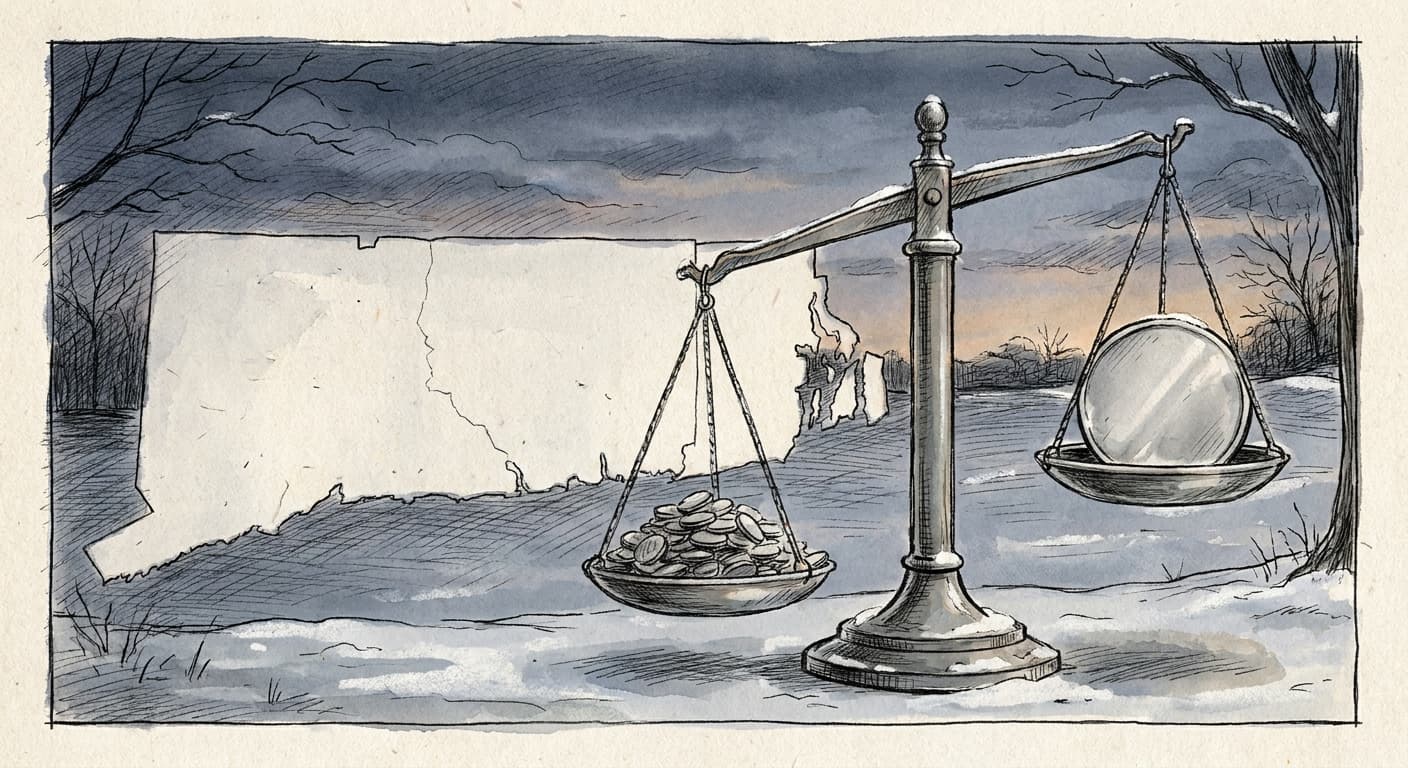
Rhode Island's lowest-earning households pay a larger share of their income in state and local taxes than the wealthiest residents do, according to the Institute on Taxation and Economic Policy's "Who Pays?" report. The bottom 20 percent of earners — households making less than $22,300 a year — pay 13.3 percent of their income in state and local taxes, while the top 1 percent, earning more than $626,200, pay 8.6 percent, the report found. ITEP ranks Rhode Island's tax system as the 32nd most regressive in the country, meaning income inequality is larger after state and local taxes are collected than before.
That gap traces back to specific decisions by the General Assembly, not accident. Around 2010, lawmakers collapsed Rhode Island's five-bracket income tax structure into three brackets and cut the top marginal rate from 9.90 percent to 5.99 percent, according to a report from the Economic Progress Institute. The change concentrated tax relief on the highest earners while steadily reducing the revenue available for schools, health care and other services, the report found.
The sales tax moved in the opposite direction. The General Assembly raised it from 5 percent to 6 percent in the 1970s and again from 6 percent to 7 percent in 1992, according to state tax records — both increases pitched as temporary measures to cover debt before lawmakers made them permanent. The rate has not budged since, leaving Rhode Island tied with Indiana, Mississippi and Tennessee for the second-highest state sales tax rate in the nation. Because sales taxes are charged on purchases regardless of a buyer's income, they consume a bigger share of a low-wage worker's paycheck than a wealthy household's.
With income tax revenue diminished by the 2010 cuts, the state has leaned more heavily on other sources. Property taxes now account for 36.4 percent of Rhode Island's combined state and local tax revenue, compared with 21.4 percent from income taxes and 20.7 percent from sales taxes, according to the Tax Foundation. Property taxes fall on homeowners and, through rent, on tenants — another channel through which the tax burden lands on people who are not the highest earners.
Gov. Dan McKee signed a state budget in June that begins to reverse part of that pattern. The spending plan creates a 3 percent surtax on income above $1 million, phased in by one percentage point a year starting with tax year 2027, which will lift the top marginal rate from 5.99 percent to 8.99 percent over three years, first reported by Bloomberg. ITEP estimates the surtax will generate more than $150 million a year once fully phased in. The budget also creates Rhode Island's first permanent child tax credit, a fully refundable $330-per-child benefit for filers under set income thresholds. Before the surtax, the bottom 20 percent of households paid an effective tax rate roughly 1.5 times higher than the top 1 percent, according to ITEP's analysis of the budget.
Not everyone agrees the surtax is the right fix. The Rhode Island Public Expenditure Council has warned that raising the top rate risks making the state less competitive for high earners, pointing to a Massachusetts CPA survey in which most accountants reported clients -considering- relocation after that state adopted a similar tax. The Economic Progress Institute has pushed back, arguing states that enacted comparable millionaires' taxes saw economic performance similar to neighboring states that did not.
The surtax's first percentage point takes effect with tax year 2027, meaning the top rate will not reach its full 8.99 percent until three years later. Whether that phase-in restores enough revenue to offset the sales and property tax burden on working families will not be clear until the state closes out several more budget cycles.