


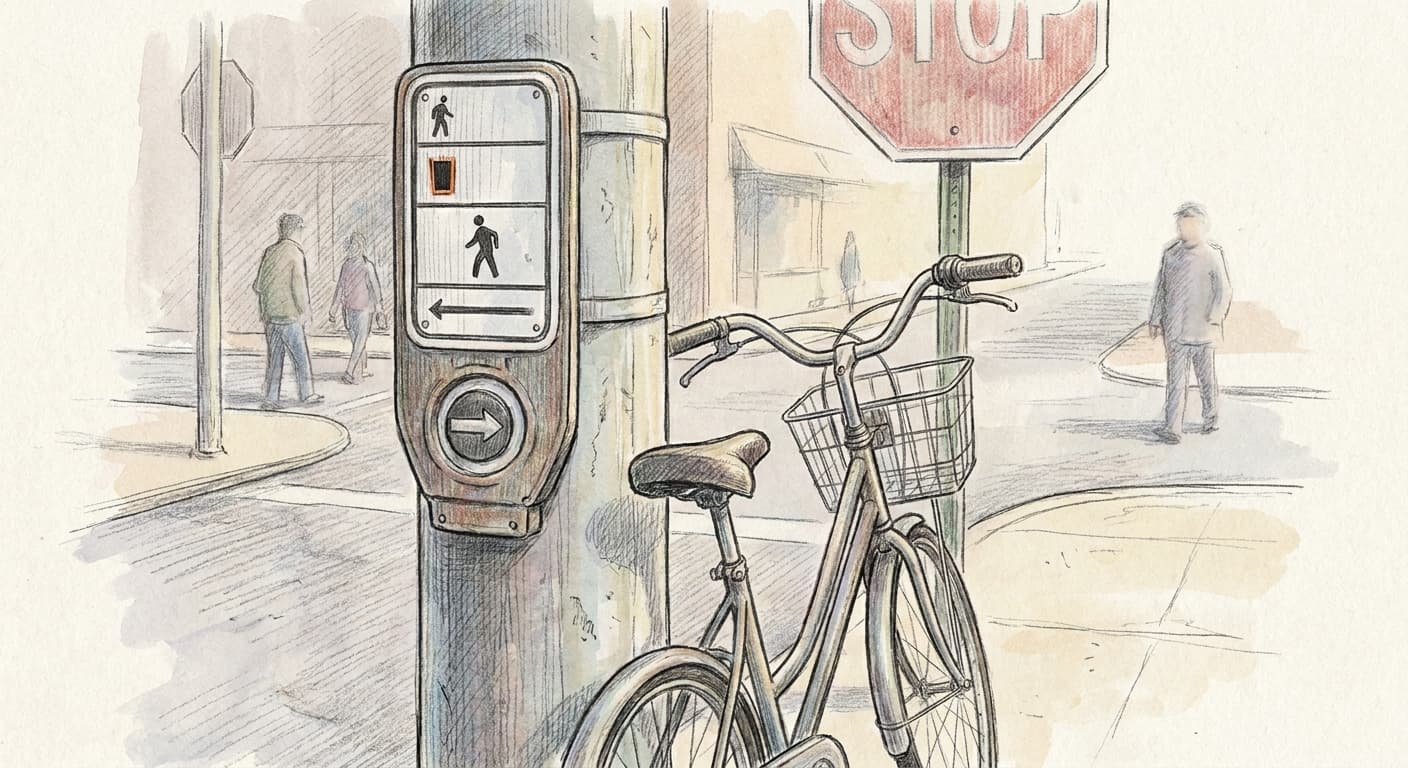
The South Kingstown Town Council declined to install a three-way stop sign at the intersection of Church Street and Railroad Street, opting instead to pursue a flashing pedestrian beacon while considering a more thorough traffic study, according to the South Kingstown Town Council's published meeting recording from its July 13 meeting.
The town's police chief told the council that a traffic study conducted over roughly a three-week period earlier this month found insufficient vehicle volume to meet state warrant standards for a three-way stop. Church Street carried an average of about 4,300 vehicles per day, the chief said, while Railroad Street carried only about 500. A review of crash data going back a decade showed seven motor vehicle collisions at the intersection, none involving serious injuries and none involving pedestrians or bicyclists, according to the chief.
The chief noted a significant limitation in the data: the study was conducted while school was out of session, meaning it did not capture traffic patterns during the school year, when volume is expected to be higher. Several council members pushed back on relying on the study for that reason, saying it likely undercounts real usage tied to South Kingstown High School.
The chief outlined four options for the council: leave the intersection as is, install a three-way stop despite it falling outside federal warrant guidelines, request a rapid-flashing beacon (known as an RRFB) at the bike path crossing, or commission a more comprehensive engineering study that would also account for pedestrian and bicycle traffic, as well as potential vehicle "stacking" back toward Columbia Street, including buses.
A resident who lives near the intersection, addressing the council during public comment, recommended a rapid-flashing beacon over a stop sign, telling the council that bright spring sunlight can make a stop sign hard to see and that a flashing beacon would likely be more visible to drivers approaching the bike path crossing.
Council members raised competing concerns. One member said a stop sign could increase minor collisions, such as rear-end crashes, citing an intersection elsewhere in town where stop signs preceded an increase in such crashes. Another questioned whether a stop sign would create backups affecting students, parents and staff who use the road to reach the high school, saying a resident had warned her it could "drastically slow down traffic to the high school." The town's director of operations for public services said he had reviewed sight lines at the intersection and initially believed a three-way stop would work, but said the low volume on Railroad Street did not justify stopping the higher-volume main road. He also raised concern about vehicles, including school buses, backing up at a stop sign toward the Columbia Street intersection.
Council members ultimately favored what one member called a "dual track" approach: formally requesting that the state install a flashing beacon at the bike path crossing, since it is a state-maintained bike path intersecting a town road, while also asking town staff to return with a proposal for a more comprehensive engineering study that would factor in the new high school's construction and anticipated traffic changes once it opens.
Council members and the town solicitor discussed procedural questions about hiring an outside engineering firm for a broader study, including whether the expense would require formal council approval. The town's director of operations for public services said the town has pedestrian safety funds available that have been used for other road safety projects, but said any study proposal would likely come back before the council regardless of cost.
No vote was taken to install any device or commission a study at the July 13 meeting. The council directed staff to pursue the state beacon request and return with more information on a potential expanded traffic study, with no timeline specified in the discussion for when that would come back to the council.