


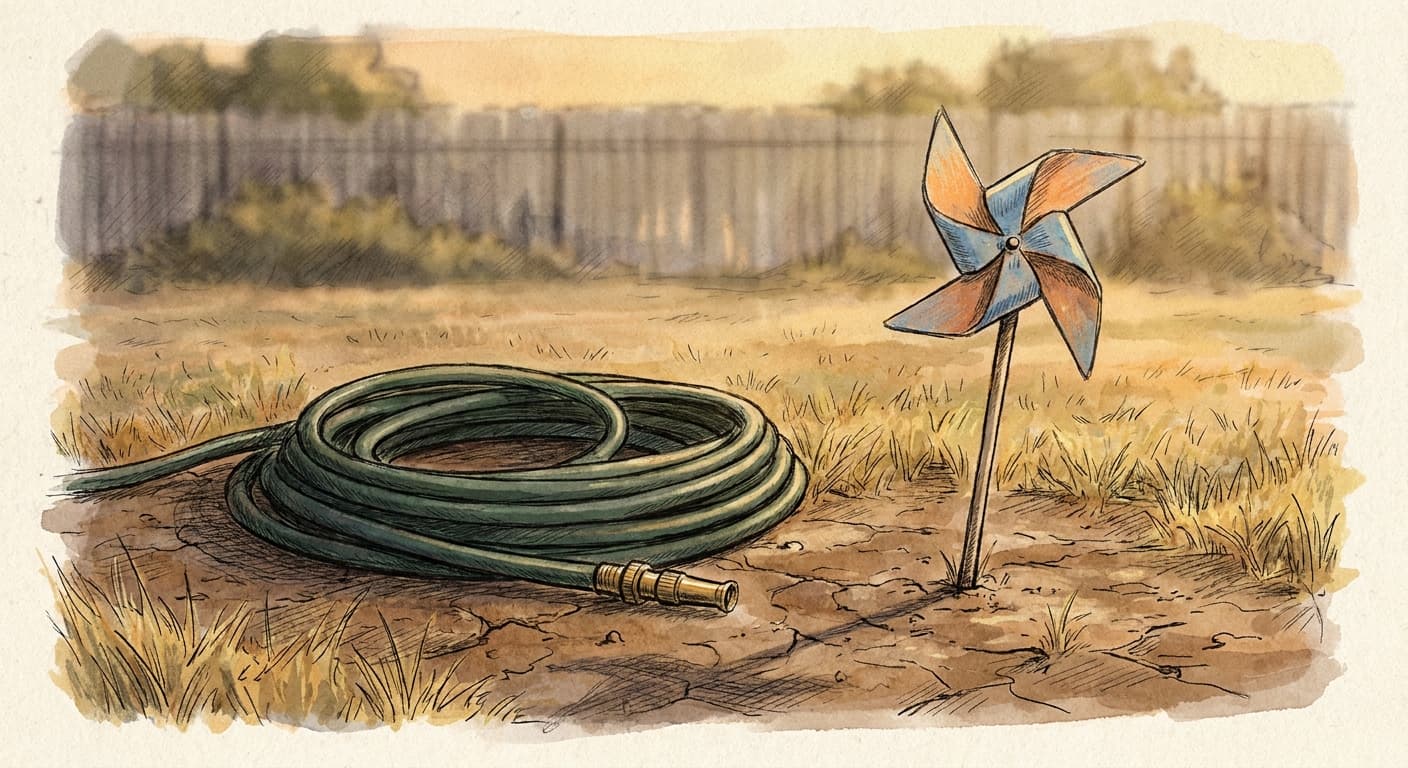
The South Kingstown Town Council held a work session Monday, July 13, to discuss the full outdoor water ban that Veolia issued for its customers on June 30, 2026, and to hear from town staff and a Veolia representative about the drought conditions driving it.
Why there's a water ban
Town Manager James Manni opened the session with background on the town's water systems: four separate water systems serve South Kingstown, with roughly 81 percent of developed parcels on municipal water and an estimated 2,100 homes relying on private wells. Veolia supplies water directly to about 8,000 customers and also sells water wholesale to the town, which resells it to residents in two other service areas.
Veolia's director of operations for Rhode Island, Chris Jacobs, told the council the ban stems from a supply problem, not simply overuse. He presented state and federal drought data showing groundwater levels have been low since November 2025, with only a brief improvement in March tied to snowmelt before conditions dried out again. As of July 9, part of the state remained in what monitors classify as a severe drought. Jacobs said the company's seven wells are all running well below normal levels, with one well at a historic low, and that Veolia is fast-tracking a possible new well site on private property, though he described the effort as still in early stages.
Town's outdoor water ordinance vs. the supply issue
Council members pressed staff and Veolia on the relationship between the town's newer irrigation ordinance — which limits outdoor watering to two days a week between Memorial Day and Labor Day — and the supply-driven ban. The director of public services told the council the ordinance appeared to be helping the town recharge its water tanks on off days, but said this year's shortage is fundamentally about a lack of rain, not resident overuse. Council members said they had approved the ordinance believing it addressed a usage problem, and expressed frustration that they only learned this week that Veolia had been tracking drought conditions since last fall.
A resident who has repeatedly asked Veolia for a residential rebate program, such as for rain barrels, renewed that request during the discussion, noting the company already offers such rebates in New York. A Veolia employee working on water conservation said any rebate program would need approval from Rhode Island's utility regulator and that the company was focused for now on managing the current shortage. Several council members said they were disappointed the company had not been more responsive on that front.
Council members and staff also discussed reviving three town-owned wells that were shut down years ago due to high iron and manganese levels, plus more recently identified PFAS contamination. Rebuilding those wells was estimated several years ago at roughly $15 million, not including PFAS filtration, and a federal grant that would have helped fund the work did not come through after a change in presidential administrations. Legal counsel for the town, identified as Amy, confirmed that under its purchase contract with Veolia, the town is legally required to enforce any water ban Veolia issues for the areas it resells water to, and that failing to do so would be a breach of contract.
Other council business
During its regular session, the council reappointed two members to the library board of trustees and appointed a new member to the Housing Authority board amid an ongoing $50 million housing project. The council approved victualing licenses for three new food businesses in Wakefield, including a pizza-by-the-slice shop and a falafel restaurant, and approved a mass gathering permit for a September folk festival downtown. The council also voted to renew a roughly $36,300 software contract used for permits, licensing and public records requests.
A representative from the school construction program updated the council on the new high school, now roughly 30 to 35 percent complete, and on demolition work underway at a middle school site, where a new athletic field is expected to be ready by March 2027. A resident asked the council to consider a flashing pedestrian beacon rather than a stop sign at a bike path crossing; the police chief presented preliminary traffic data suggesting the intersection does not meet standard criteria for a three-way stop, and the council directed staff to request a flashing-beacon installation from the state while also considering a more comprehensive traffic study once school is back in session.
The council also accepted the resignation of a member of the town's Canvassing Authority, effective September 1.
What's next
Council members said they expect continued updates from Veolia and town public works staff on drought conditions and the water ban's status at future meetings. The council's next regular meeting is scheduled for July 27, when a delayed item on license-plate reading camera technology is expected to return to the agenda.