


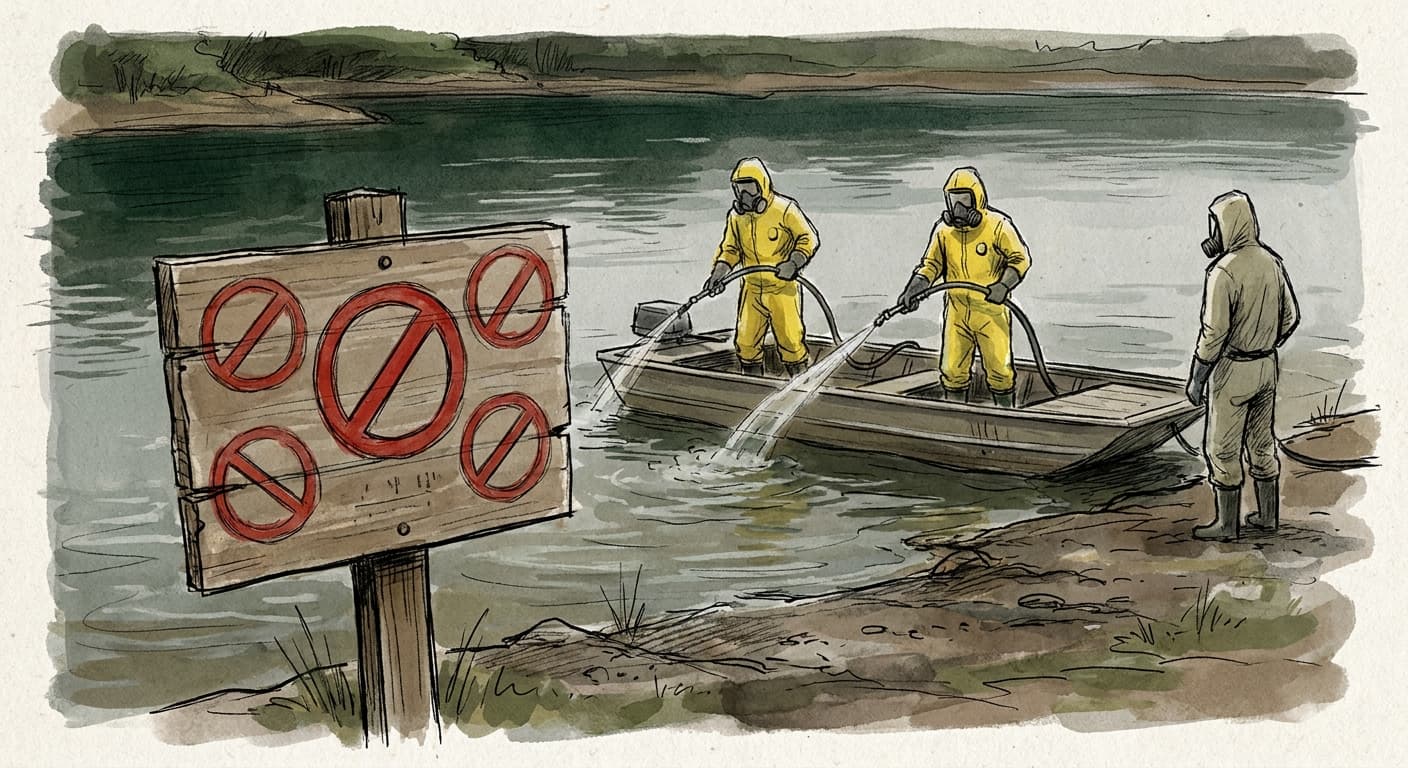
Swimmers, boaters and anglers at Tiogue Lake found the water off-limits Tuesday, not because of the toxic algae or bacteria that have repeatedly closed the Coventry lake in recent years, but because crews were pumping herbicide into it to kill invasive weeds.
The Town of Coventry announced the treatment in a public notice posted Monday afternoon, closing the 230-acre lake to all swimming, boating and fishing for the day. Recreation is set to resume Wednesday, July 15. But the herbicide application, carried out by Water & Wetland, LLC, a lake management company based in Upton, Massachusetts, triggers a longer chain of water-use restrictions that will stretch into the weekend for residents, pet owners and anyone who irrigates a lawn or garden with lake water.
The treatment is a joint effort between the town and the Tiogue Lake Association, a nonprofit neighborhood group that helps manage the lake, operating under a chemical-application permit issued by the Rhode Island Department of Environmental Management. The goal is to knock back invasive vegetation that has spread through the lake for years, choking out native plants, fouling boat propellers and making swimming unpleasant.
What's restricted, and for how long
The restrictions come in stages. Swimming, boating, fishing and letting livestock or pets drink from the lake are barred through Wednesday. A ban on using lake water for drinking, cooking or watering lawns and landscaping runs through Friday, July 17. And anyone irrigating food crops or newly seeded turf with lake water needs to wait until Sunday, July 19.
The staggered timeline reflects how long it takes the herbicide to break down to safe levels rather than any sign the chemical is unusually hazardous. The compound applied was not named in the town's notice, though Water & Wetland typically uses EPA-registered aquatic herbicides such as ProcellaCOR, fluridone or imazamox to fight invasive milfoil in New England lakes.
Weeds, not algae
Tuesday's treatment targets vascular plants, chiefly variable-leaf milfoil and fanwort, two invasive species that have plagued Tiogue Lake and dozens of other Rhode Island waterbodies. It is a different problem than the toxic blue-green algae bloom that forced a monthslong avoid-contact advisory near Briar Point Beach from August through late November 2025, or the fecal bacteria that closed the beach again for two days in mid-June 2026 after enterococcus levels spiked. James Lacasse, an aquatic specialist with Water & Wetland, has defended the safety of the company's chemical applications in Rhode Island communities, telling GoLocalProv that if the products were truly dangerous,