


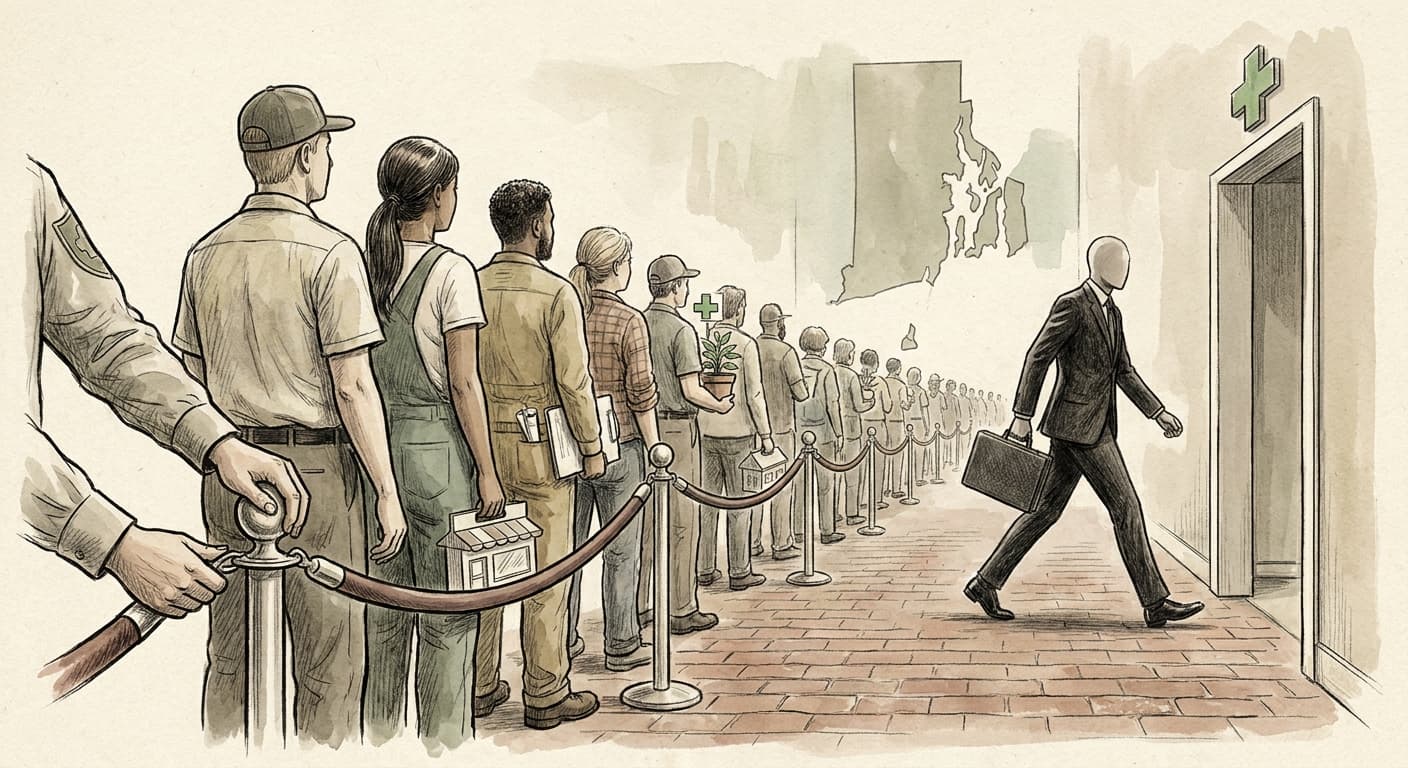
There is a particular kind of silence that settles over a legislative hearing room after the crowds leave—a quiet space where paper rustles and late-afternoon light cuts across the heavy wooden desks. For nearly four years, Rhode Island’s aspiring cannabis entrepreneurs have lived in a state of prolonged courtship with the state's licensing process, waiting for the promises of local ownership to finally bear fruit. It was an engagement that promised local equity, born out of the 2022 legalization of adult-use cannabis.
But relationships, as we know, are fragile things.
On June 10th, the Governor signed H8544 into law, effectively calling off the long-awaited wedding and resetting the rules of engagement.
Sponsored by Representative Scott Slater, H8544 was introduced on May 13th. It moved through the House Corporations Committee, which briefly held it for further study before recommending its passage on June 2. The House passed the bill on June 4, and the Senate followed in concurrence on June 9, sending it to the Governor's desk.
You deserve to know this: those years of waiting, of planning, and of paying fees to secure a place in the licensing queue have been swept away in a single stroke.
The new law does something remarkably swift: it cancels every single pending social equity and retail cannabis license application currently on file. The state will refund the application fees to those whose dreams have been nullified. Within 60 days, a completely new application process must begin.
But the real heartbreak for local advocates lies in who is now invited to the ceremony.
H8544 removes the requirement that cannabis license applicants must be Rhode Island residents, eliminating the rule that these businesses must be majority-owned by locals. Under the new framework, out-of-state corporate entities and wealthy investors are free to enter the market and compete.
The law also fundamentally redefines who qualifies as a "social equity applicant." Gone is the focus on income levels or residency in high-unemployment, "disproportionately impacted areas" within Rhode Island. Instead, the priority narrows strictly to individuals and families directly impacted by past cannabis criminalization—including those arrested or convicted of cannabis offenses in other states.
Supporters of the overhaul argue the changes are a necessary course correction. By focusing social equity status strictly on those harmed by past criminalization, the law ensures those most affected by the War on Drugs receive priority, regardless of where they now live. It also reduces complex regulatory red tape, saves taxpayers money by protecting the state from potential lawsuits over its previously flawed licensing process, and embraces free-market principles by allowing out-of-state capital to compete.
Critics, however, feel jilted. For progressive advocates, the removal of low-income and local residency criteria opens the floodgates for out-of-state corporate monopolies to dominate the local market, extracting wealth from Rhode Island communities. For local entrepreneurs, the cancellation of the existing application process represents an unpredictable regulatory environment that delays their ability to build businesses they have spent years preparing for. Even some conservative critics have expressed concern, arguing that the law continues to offer preferential licensing treatment to individuals with criminal records while expanding those privileges to people who broke the law in other states.
The old line has been cleared, the deposits are being returned with a refund check, and Rhode Island has opened its arms to wealthier, out-of-state suitors.