


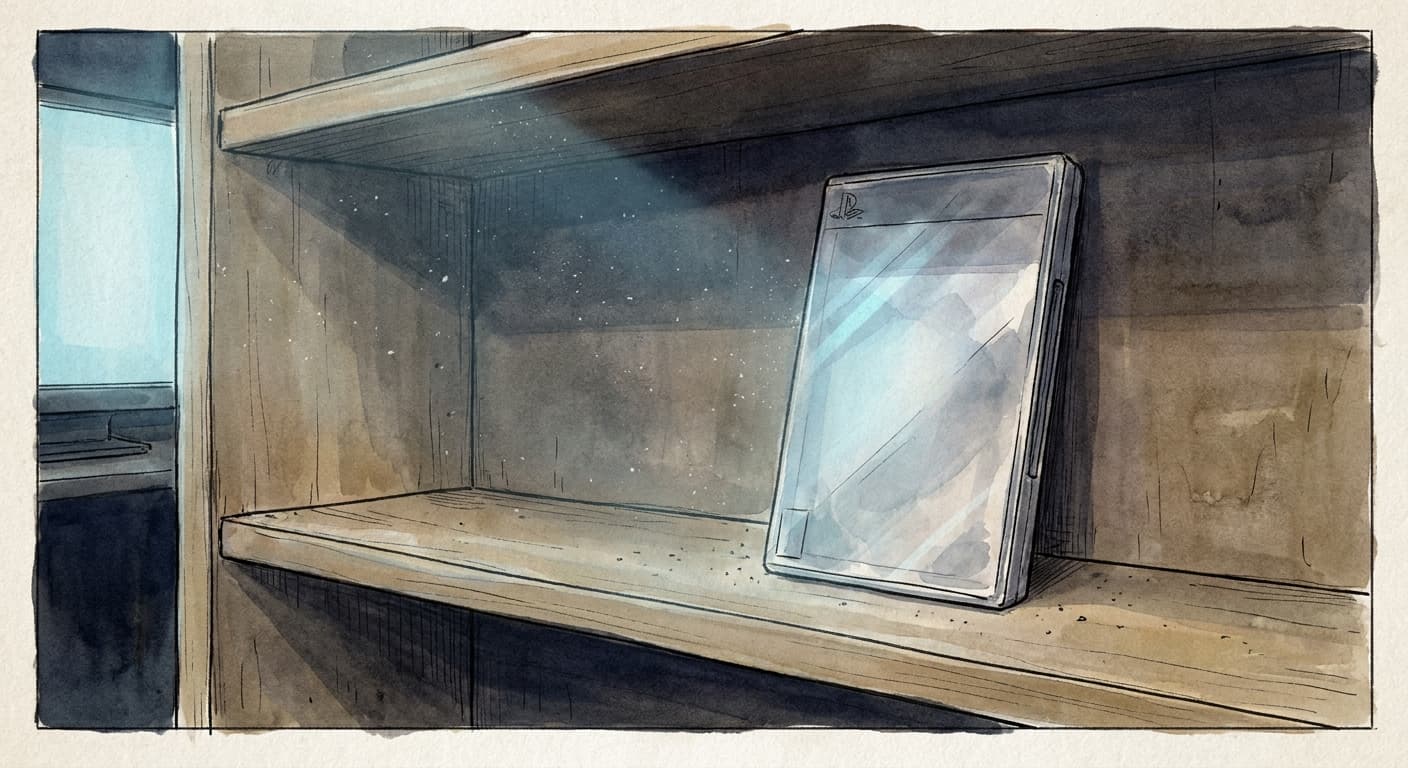
Sony wants you to know the future is digital. Sid Shuman, the company's senior director of content communications, put it plainly in a PlayStation Blog post on July 1: starting in January 2028, Sony will stop producing physical discs for all new games releasing on its consoles. No more shrink-wrapped cases on store shelves. No more trade-ins at the counter. Just a download, and a license.
That word — license — is the whole story.
Sony's own numbers explain why the company feels safe making this bet. Digital downloads already accounted for 85% of full-game software sold on PS4 and PS5 in the fourth quarter of fiscal year 2025, leaving discs with the remaining 15%. And yet, oddly, U.S. physical game sales just grew 3%, to $1.6 billion, in the twelve months ending in May 2026, according to the market research firm Circana — the first year-over-year growth in that category since 2009. Sony is walking away from physical media at the exact moment a stubborn slice of its customers started buying more of it. Timing is a choice, too.
Here's the mechanism underneath the headline. When you buy a physical game, ownership transfers to you, full stop — the legal doctrine is called first sale, and it's why used bookstores, video rental shelves and GameStop's trade-in bins have been legal for a century. Courts have ruled, in cases like Vernor v. Autodesk and Capitol Records v. ReDigi, that first sale simply does not extend to digital goods, because a digital transfer counts as a reproduction rather than a sale of a physical object. You're not buying a copy. You're buying permission to access one — permission that can be modified or revoked.
The Federal Trade Commission has already flagged the gap. In an April 2024 consumer alert, the agency warned that "what you really got when you clicked 'buy' is often merely a license to access the content," a fact "often explained only in fine print in the terms of service — terms that the seller can usually change at will." Sen. Ron Wyden pressed the point further, writing to FTC Chair Andrew Ferguson in February 2025 to urge the agency to require online storefronts to state clearly whether a digital purchase is permanent or merely a license. California didn't wait for Washington: Assembly Bill 2426 took effect in April 2026, forcing online retailers there to disclose upfront whether a digital good is owned or licensed. Rhode Island has no equivalent statute. The Attorney General's office fields consumer complaints and the state's newer data-privacy law covers how companies handle personal information, but nothing on the books here tells a Rhode Islander whether the PlayStation game she just bought is actually hers.
The fight over what "physical" even means is already playing out around Grand Theft Auto VI. Rockstar Games confirmed that the game's physical edition ships as a retail box containing a one-time download code — no disc inside. The retailer Video Games Plus refused to carry it, saying in a statement that "for nearly 40 years, VGP has been committed to supporting physical media and preserving the value of physical game ownership," and that its policy bars carrying console products that contain only a download code. One retailer's line in the sand, drawn against the industry's most anticipated release in over a decade.
Sony's January 2028 date gives players eighteen months to adjust. What they're adjusting to is a market where clicking "buy" has quietly stopped meaning what it used to.